
Last updated September 10, 2026
Level 1 sweep and inspection to the NFPA 211 annual standard - flue, crown, cap, and flashing checked and photographed
Chimney sweep logs do not sweep chimneys. They loosen some creosote - which then falls where a brush and vacuum still have to collect it.
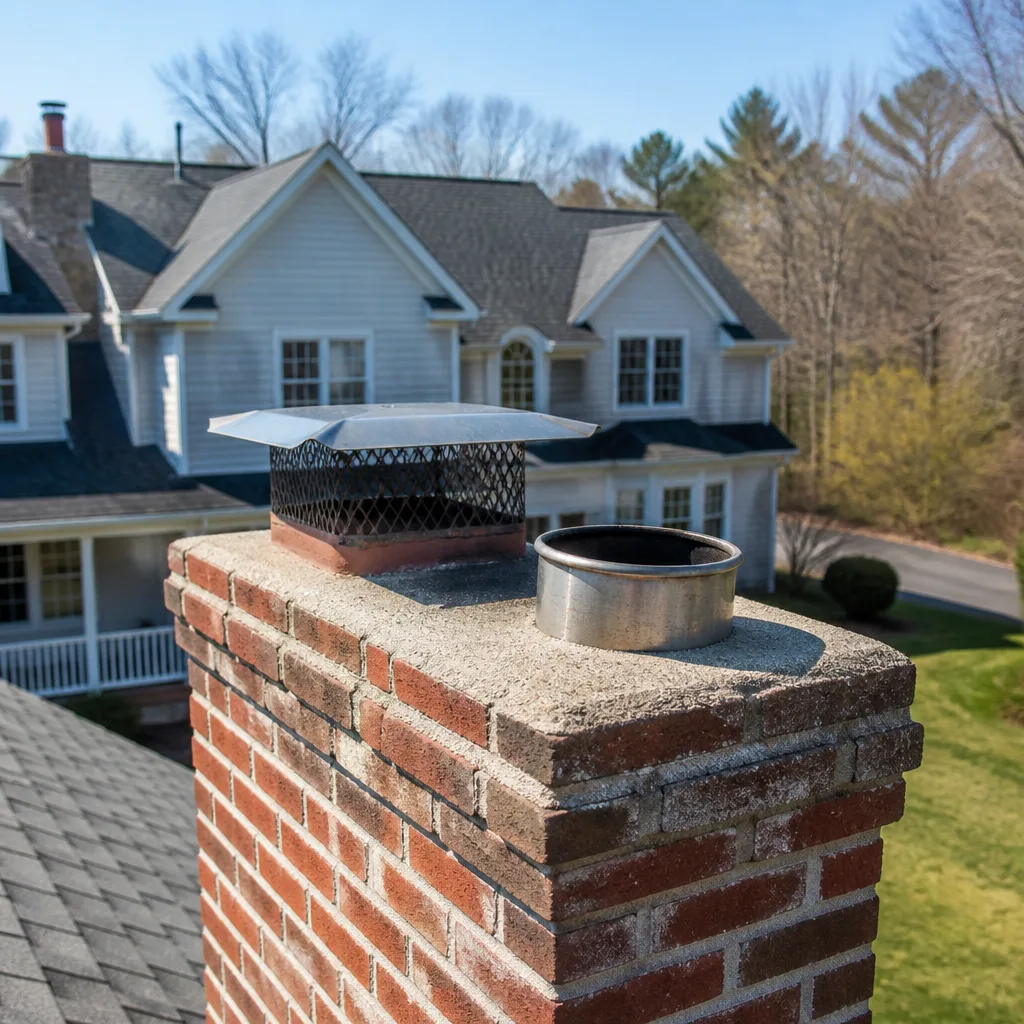
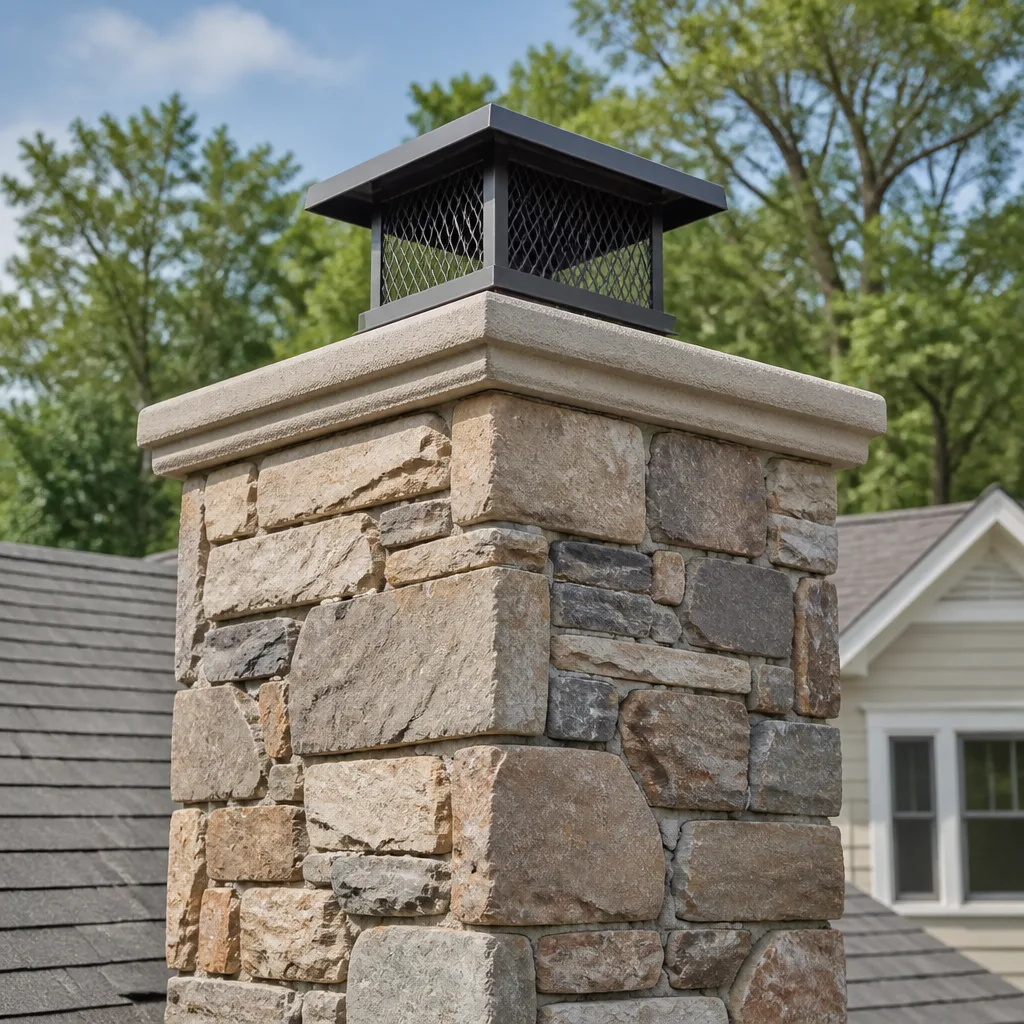
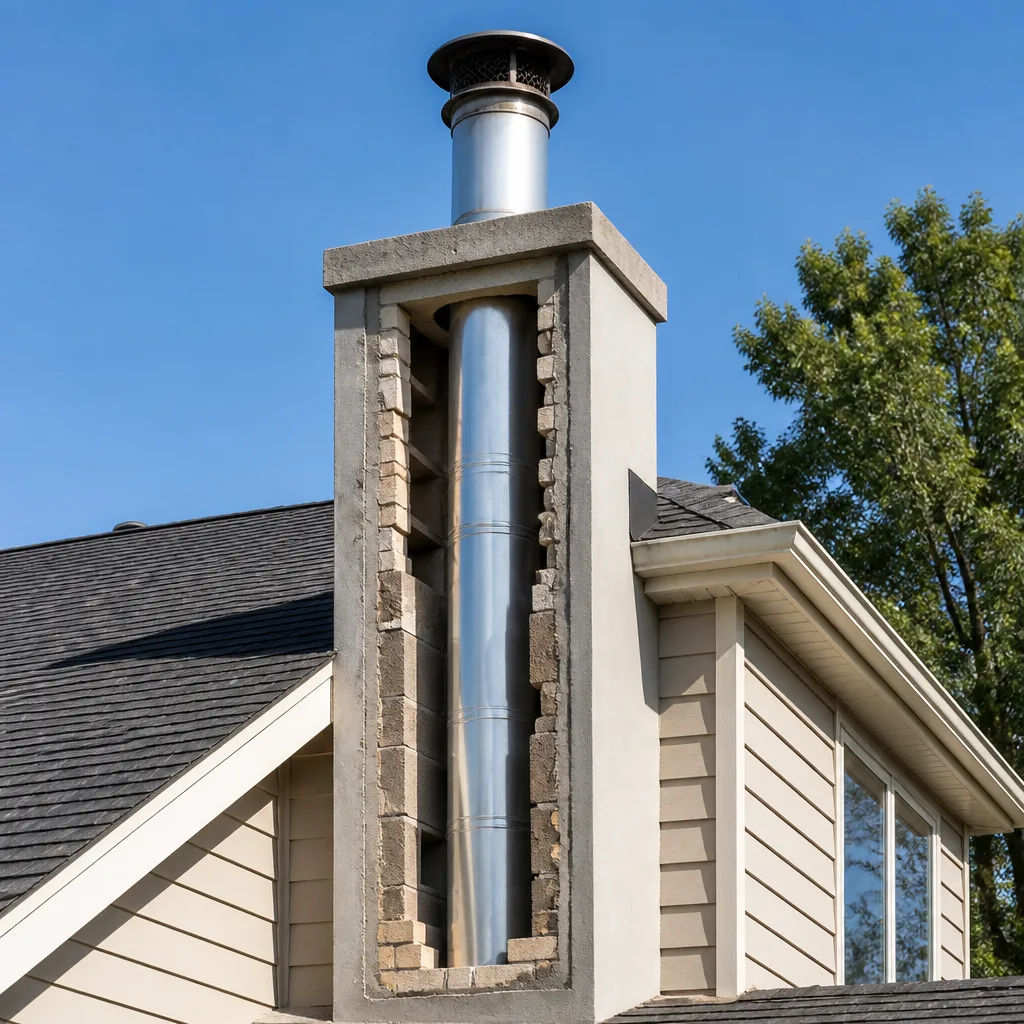
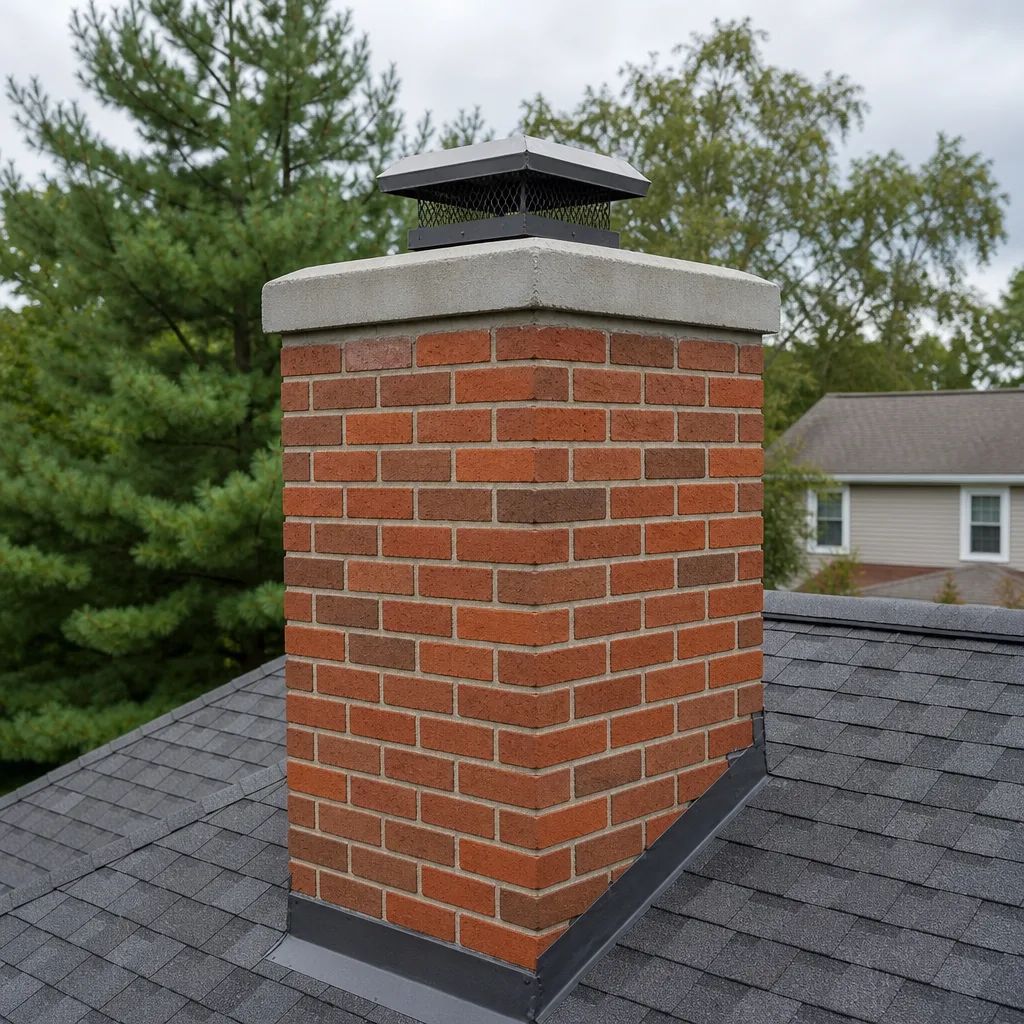
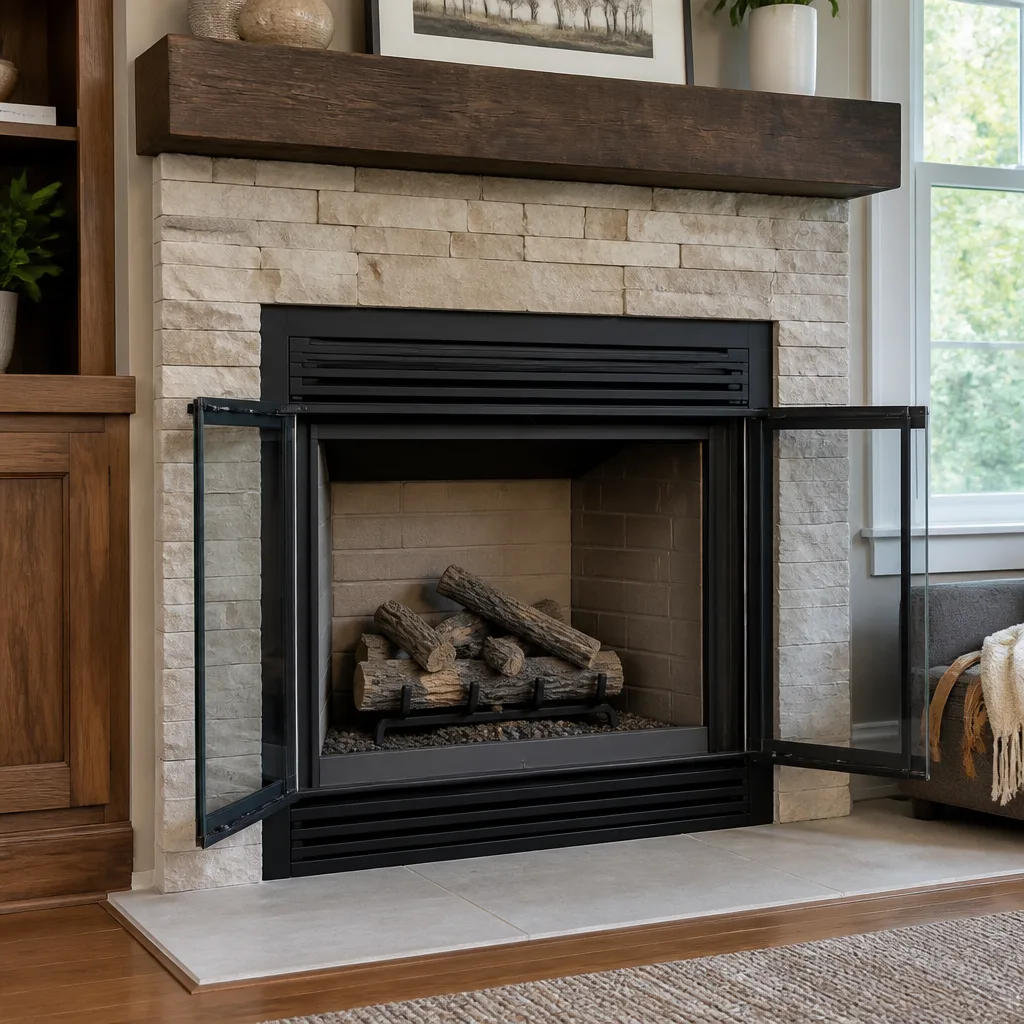
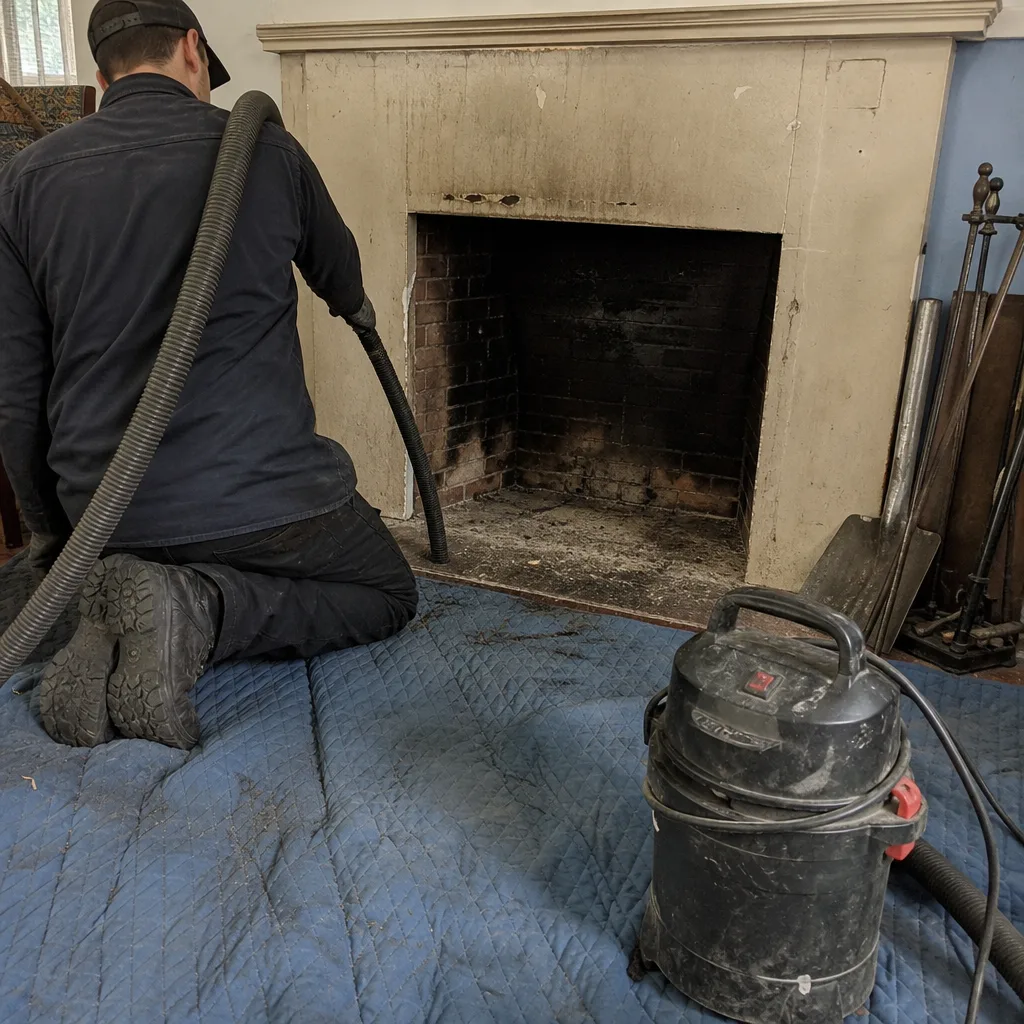 Before
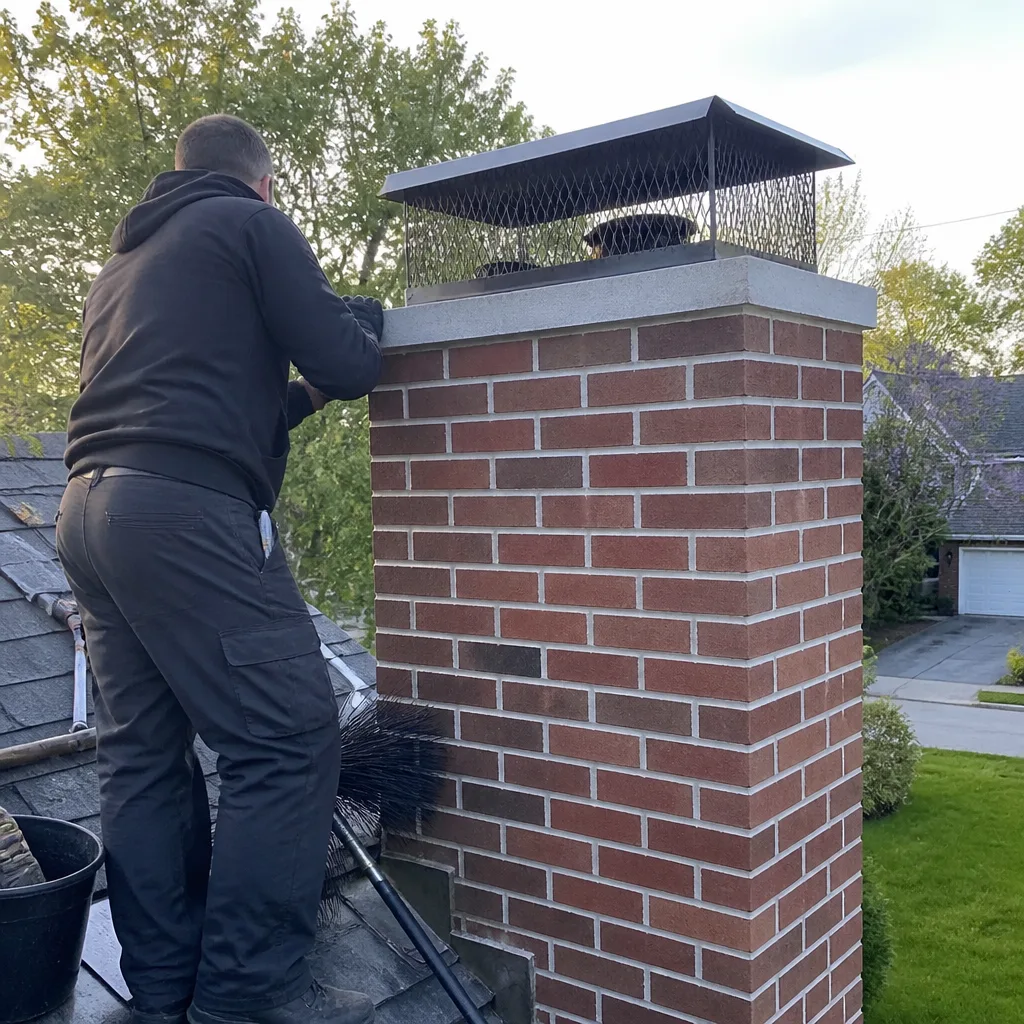 After
After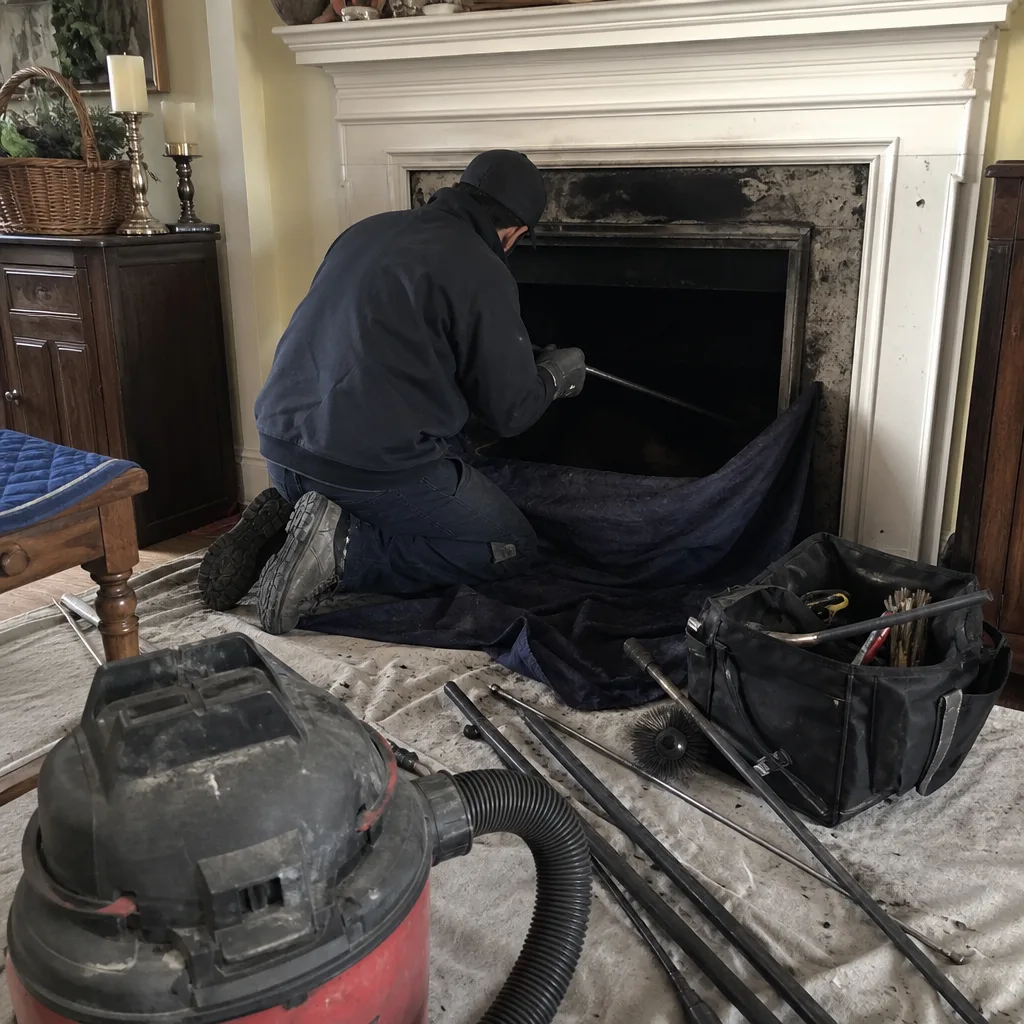 Before
 After
After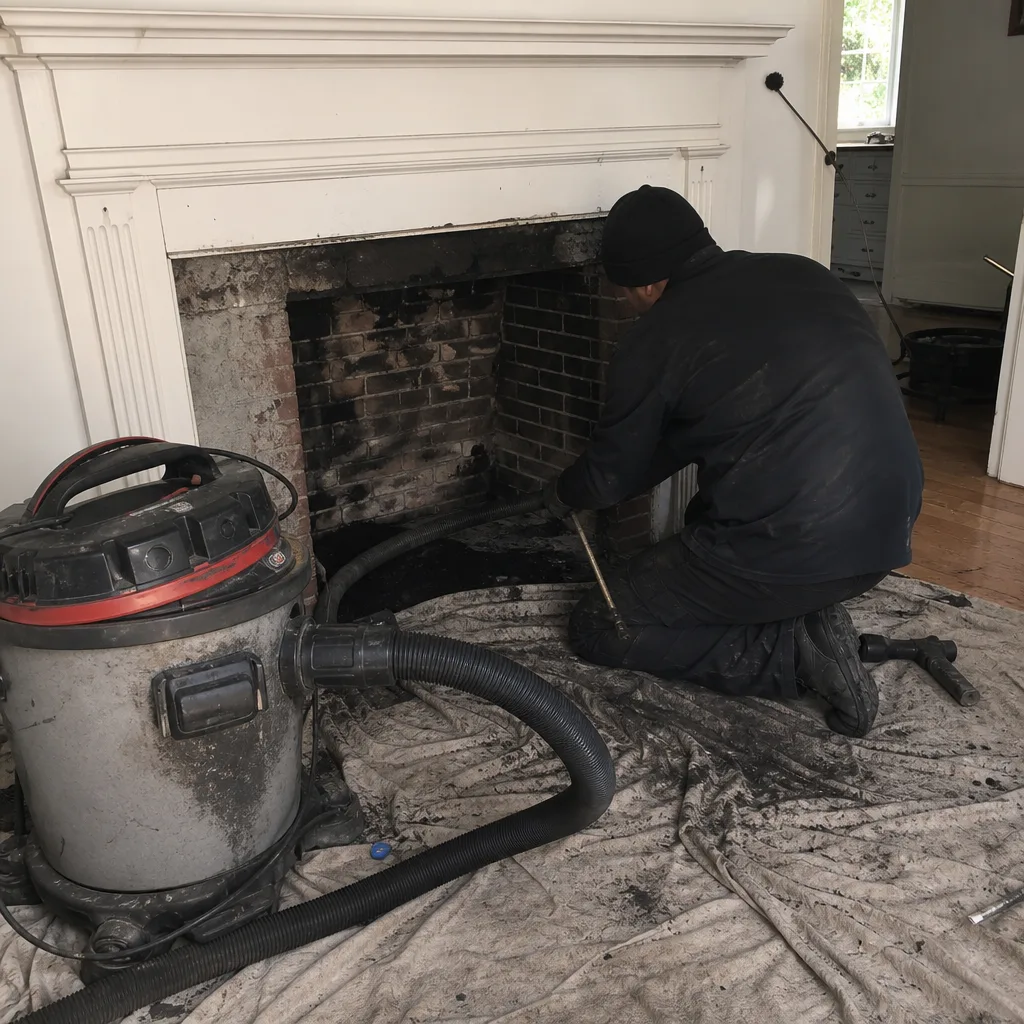 Before
 After
AfterThe Complete Guide to Chimney Cleaning in Cambridge
More than half the chimneys Hearthstone inspects in Cambridge each fall show creosote accumulation that started during the previous heating season - not the current one. One cleaning cycle per year sounds responsible until you understand how fast a high-use wood burner in a triple-decker builds stage-two creosote. In this guide, we’ll explain why Cambridge’s 1880s-1930s masonry, dense urban soot loading, and coastal humidity from the Charles River corridor create conditions that make generic “annual sweep” advice potentially misleading for local homeowners.
Quick Answer
Chimney cleaning in Cambridge typically costs between $189 and $349 for a standard sweep with Level-1 inspection, though most Cambridge homes with older masonry or oil-to-gas conversion history need a Level-2 camera inspection ($289-$479) to properly assess flue condition. Homes with wood-burning inserts in high-use scenarios - common in Cambridge’s triple-decker rentals and vintage colonials - often need sweeping twice per heating season due to accelerated creosote formation in our humid coastal climate.
Table of Contents
- Why Cambridge Chimneys Are Different
- How Often Should You Clean Your Chimney in Cambridge?
- What Actually Happens During a Chimney Cleaning
- Level 1 vs. Level 2 vs. Level 3 Inspections
- Understanding Your Costs in the Cambridge Market
- Cambridge-Specific Risks: Humidity, Soot, and Old Masonry
- Choosing a Chimney Sweep in Cambridge
- Common Mistakes to Avoid
- When to Call a Professional
- Frequently Asked Questions
Why Cambridge Chimneys Are Different
Cambridge’s housing stock is not like the post-war suburbs that ring Route 128. Roughly 60% of our residential buildings predate 1940, and that matters enormously for chimney performance, safety, and maintenance.
The 1880s-1930s masonry problem. Most Cambridge chimneys were built with soft, porous brick and lime mortar that expands and contracts differently than modern materials. In Porter Square and Harvard Square Victorians, we’ve found flue liners that were never installed - just bare brick passages that collect acidic condensate from modern appliances. In Mid-Cambridge and Area 4 triple-deckers, the original flues were sized for coal or oil burners with high stack temperatures. When those systems converted to gas, the lower exhaust temperatures meant more moisture lingered in the flue. That moisture combines with Cambridge’s ambient humidity, which averages 15-20% higher than inland Massachusetts towns, to accelerate mortar deterioration and metal liner corrosion.
The oil-to-gas conversion legacy. Between 1970 and 1995, thousands of Cambridge properties switched from oil to gas heat. The flues didn’t get smaller to match the new appliances. An oversized flue for a gas burner behaves like a cold chimney - exhaust cools before it exits, condensing water and carbon acids on the walls. We’ve pulled apart flues in Inman Square properties where the original 8″×12″ terra cotta liner was serving a 80,000 BTU gas boiler. The bottom third was glazed with sulfate crust. The homeowner had no idea because the appliance was “working fine.”
Urban soot loading. Cambridge sits in the Boston metropolitan particulate zone. Fine particulate from traffic, construction, and regional industry settles on chimney crowns and enters flue systems through damaged mortar joints. We’ve documented cases in East Cambridge, near the former industrial corridor, where exterior soot accumulation on chimney exteriors required specialized chemical treatment before standard sweeping could proceed.
Coastal humidity corridor. The Charles River and Boston Harbor create a microclimate that keeps Cambridge masonry damp longer than inland towns. Damp masonry draws heat from flue gases, dropping temperatures below the dew point faster. The result is more condensate, more acid formation, and more rapid degradation of both unlined brick and stainless steel liners. In our experience, a stainless liner in Cambridge lasts 15-22 years. The same liner in a drier climate like Fitchburg often reaches 25-30 years.
These factors don’t mean Cambridge chimneys are doomed. They mean the standard advice - “sweep once a year, any sweep will do” - is too blunt for this market. Specific conditions demand specific responses.
How Often Should You Clean Your Chimney in Cambridge?
The National Fire Protection Association (NFPA) recommends annual inspection, with cleaning “as necessary.” In Cambridge, “as necessary” comes more often than most homeowners expect.
Wood-burning appliances: likely twice per season. If you heat with wood in a Cambridge triple-decker, condo conversion, or detached colonial, you’re probably running 4-6 cords through a flue that was designed for a different era. The combination of high-use, humid combustion air, and often-oversized flues creates stage-two glazed creosote in as little as 40-60 burn days. We recommend:
- Pre-season inspection and sweep: September-October, before first fire. This catches summer moisture damage and removes last season’s accumulation.
- Mid-season check: January-February, after roughly 60 burn days. A Level-1 inspection with sweep if creosote exceeds 1/8 inch.
- Post-season assessment: April, to document condition and plan any repairs before fall demand peaks.
Gas and oil appliances: annual inspection, cleaning every 2-3 years. Gas burns cleaner than wood, but the condensate problem in oversized flues means debris and corrosion products still accumulate. Oil systems produce sulfur compounds that form acidic sludge. We find Cambridge oil-to-gas conversions particularly need attention at the flue transition - where the new vent connector meets old masonry.
Pellet stoves: manufacturer schedule, typically annual. Pellet exhaust is low-temperature and high-moisture, which in Cambridge’s climate can mean vent pipe corrosion if the installation isn’t perfectly sealed. We inspect pellet venting as part of our fireplace services in Cambridge.
The rental property factor. Cambridge’s housing market includes thousands of tenant-occupied units where the landlord schedules maintenance and the tenant operates the appliance. Miscommunication is common. We’ve found flues in Central Square and Kendall Square rentals that hadn’t been inspected in five years because “the landlord said it was handled” and “the tenant assumed the oil company checked it.” If you own rental property in Cambridge, establish a direct relationship with a sweep and document every visit.
What Actually Happens During a Chimney Cleaning
A proper chimney cleaning is not “a guy with a brush on a pole.” Here’s what Hearthstone technicians actually do on a Cambridge job, step by step:
- Site protection. Drop cloths from the hearth to the door, HEPA vacuum setup, tool staging on a protective mat. We wear uniforms and photo-ID badges - no one enters your home unidentified.
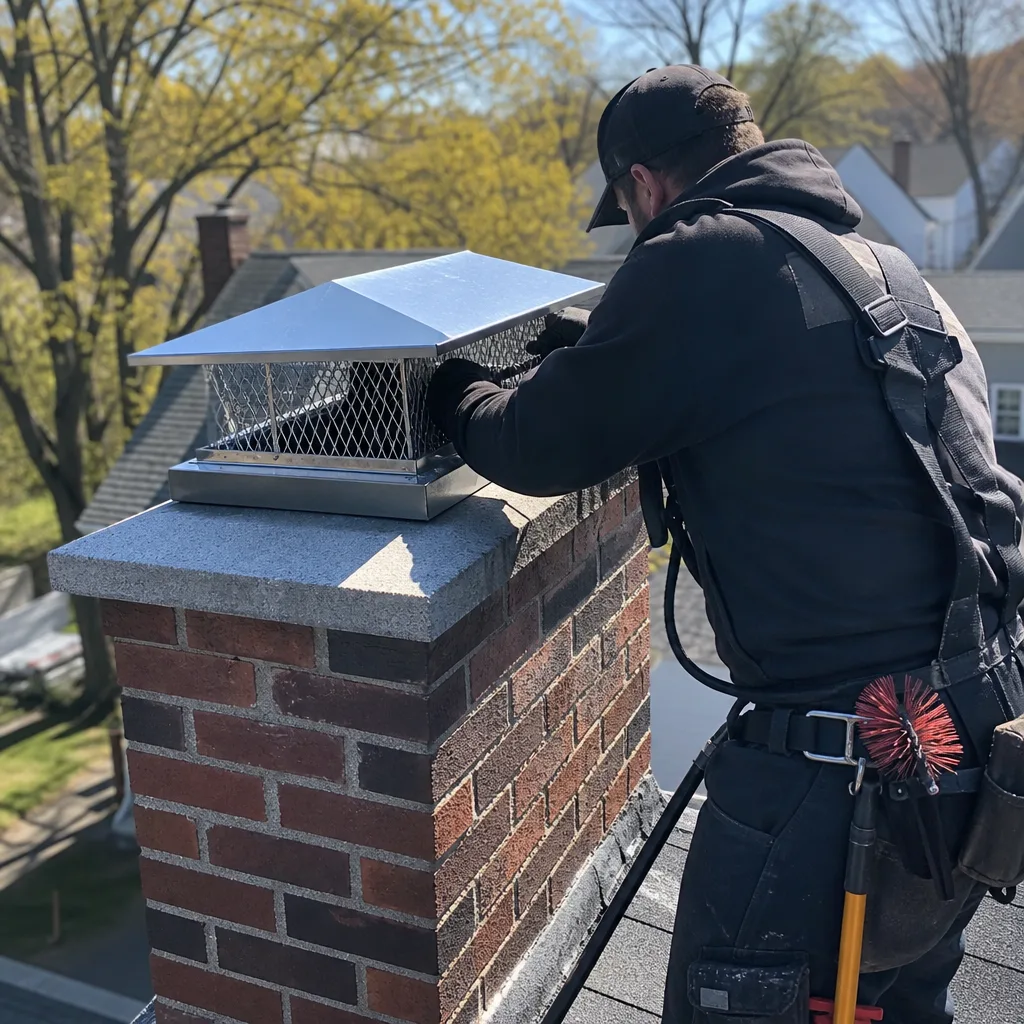
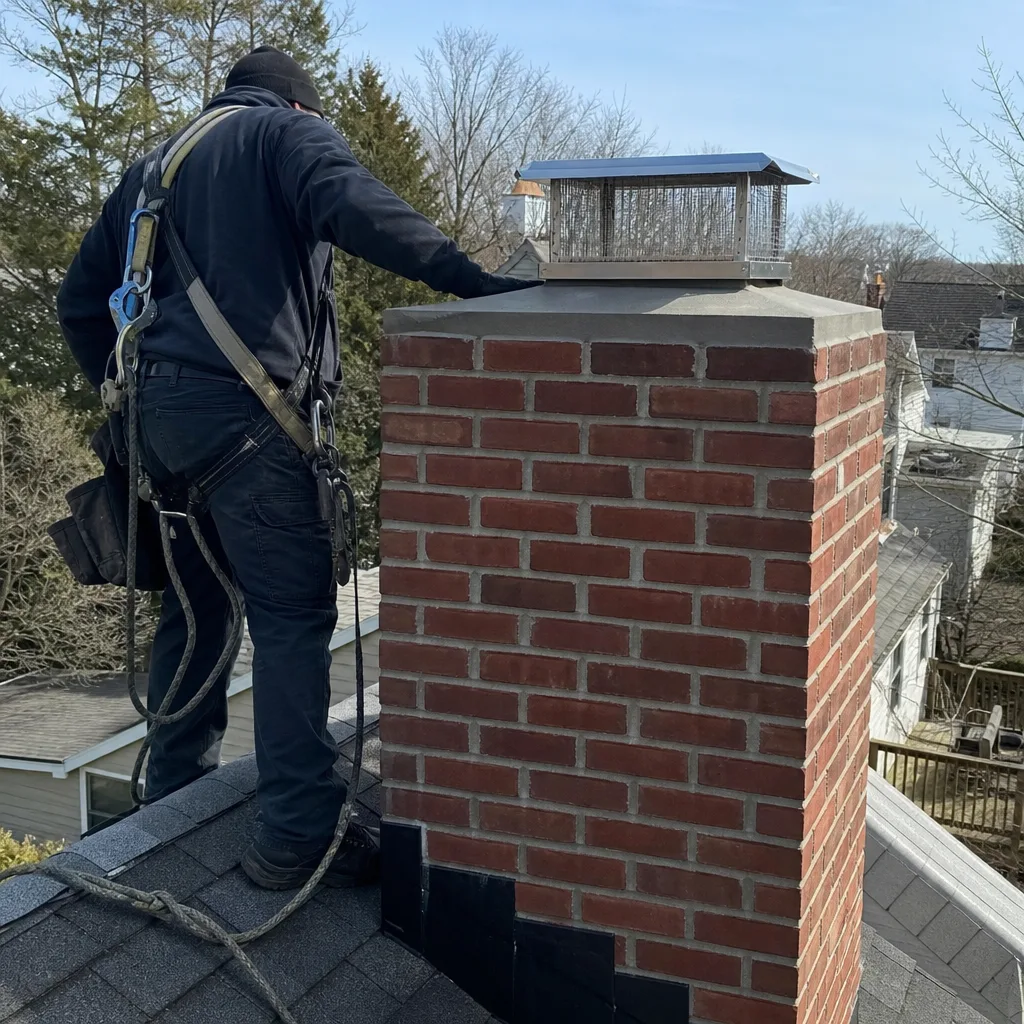
- Exterior assessment. Before touching the flue, we examine the chimney crown, cap, flashing, and visible brickwork from roof or ladder. In Cambridge, we’re looking for crown cracks that let Charles River basin moisture into the flue, and for spalled brick from freeze-thaw cycles.
- Appliance shut-down and access. Gas valves locked out, wood stove disconnected if needed, damper inspected for operability.
- Mechanical sweeping. We use rotary power sweeping with poly or steel whips sized to the flue diameter, not old-fashioned bristle brushes that can damage terra cotta. Debris drops to the smoke chamber and is vacuumed out. For glazed creosote, we apply ACS anti-creosote treatment and return 24-48 hours later for removal.
- Smoke chamber and firebox cleaning. The area above the damper and below the flue throat collects the most debris. We hand-scrape and vacuum this space completely.
- Camera documentation. Even on a standard sweep, we run a visual scan with our chimney camera to verify flue wall condition. Photos go to you with the report.
- Final inspection and report. Damper re-engaged, appliance reconnected, work area cleaned. You receive a written condition report with photos, recommendations prioritized by urgency, and - if no immediate work is needed - a notation of when to schedule next.
Most Cambridge jobs take 60-90 minutes for a standard sweep, 90-150 minutes if we find conditions requiring additional treatment or documentation. We complete most jobs in a single visit, with no-hassle upfront pricing agreed before we start.
Level 1 vs. Level 2 vs. Level 3 Inspections
NFPA 211 defines three inspection levels, and Cambridge homeowners routinely get the wrong one. Understanding the difference protects you from both under-inspection and overselling.
Level 1: Accessible areas, visual only. This is the annual “check and sweep” for systems with no changes, no problems, and continuous use. The technician examines readily accessible portions of the chimney exterior, interior, and connecting appliance. No tools, no disassembly, no camera. Appropriate for: a gas fireplace you’ve used normally for years with no issues, a wood stove you installed last year and want verified before this season.
Level 2: Camera inspection, accessible areas plus attics, crawl spaces, basements. This is what most Cambridge homes actually need. Level 2 includes everything in Level 1 plus video scanning of the flue interior, inspection of accessible portions in attics and basements, and evaluation of clearances to combustibles. Required by NFPA 211 when: the property is changing hands, the flue is being relined, the appliance fuel type changed, there’s been a chimney fire or seismic event, or the system has been unused for more than one season.
In Cambridge, we recommend Level 2 as the baseline for:
- Any pre-purchase inspection - the Cambridge market moves fast, but a $350 camera inspection can reveal $4,000-$8,000 in hidden flue damage
- Any oil-to-gas conversion, even decades past - the flue damage from condensate often takes 10-20 years to become visible
- Any chimney fire history, even “small” ones - thermal shock cracks terra cotta liners in ways invisible from below
- Any system unused for two or more seasons - moisture intrusion in Cambridge’s climate accelerates deterioration in idle flues
- Any change of appliance type or fuel - pellet insert in a wood fireplace, gas log set in a masonry chimney, etc.
Level 3: Destructive inspection. This involves removing building materials - drywall, masonry, chimney surround - to access concealed portions of the system. Required only when Level 1 or 2 indicates a hazard that cannot be evaluated otherwise. We perform Level 3 inspections only after documenting the specific concern with photos and obtaining written homeowner authorization. In 42 years, Level 3 represents less than 3% of our Cambridge inspections.
The photo standard. A Level 2 inspection without photos is not a Level 2 inspection. The camera documentation is the inspection. If a sweep tells you “the flue looks fine” but cannot show you images, you have no verification. Our chimney cleaning and sweep in Cambridge includes photo documentation with every Level 2. You see what we see. The plain-English verdict tells you what it means.
Understanding Your Costs in the Cambridge Market
Chimney service pricing in Cambridge reflects local labor costs, parking and access challenges, and the specialized equipment required for older masonry. Here’s what to expect:
| Service | Typical Range | What Affects Price |
|---|---|---|
| Level-1 sweep and inspection | $189-$279 | Appliance type, accessibility, amount of creosote |
| Level-2 camera inspection with sweep | $289-$479 | Flue length, number of flues, roof access difficulty |
| Glazed creosote removal (chemical + return visit) | $180-$340 additional | Extent of glazing, flue diameter, number of returns needed |
| Chimney cap installation (stainless) | $380-$650 | Flue count, cap style, existing crown condition |
| Stainless steel liner (single-wall, average flue) | $2,800-$4,500 | Flue length, diameter, number of bends, appliance type |
| Crown repair/rebuild | $650-$1,800 | Crown size, damage extent, need for forming vs. resurfacing |
Cambridge-specific cost factors:
- Parking and truck access. Many Cambridge streets have resident-only parking, narrow lanes, or active construction. We build travel time into Cambridge estimates, and we know which neighborhoods require permit parking or early-morning scheduling.
- Roof access on triple-deckers. Ladder placement on tight Cambridge lots sometimes requires specialized equipment. We’ve used boom lifts on properties between Harvard and Central Squares where standard ladders couldn’t safely reach.
- Historic district considerations. Cambridge’s numerous historic districts don’t regulate chimney maintenance, but they do affect exterior repair materials and methods. We specify compatible mortars and brick when crown or exterior work is needed.
Hearthstone offers no-hassle upfront pricing - the number on the estimate is the number on the invoice. We also honor a permanent 5% Senior and Veteran discount, and our $89 Seasonal Tune-Up is available for qualifying gas fireplace systems. For repairs over $250, we offer $50 off. If you have a written estimate from another sweep, we’ll provide a Free Second Opinion.
Cambridge-Specific Risks: Humidity, Soot, and Old Masonry
We’ve covered the structural factors. Here is how they manifest as specific hazards in Cambridge homes.
Creosote type and removal difficulty. Creosote forms in three stages. Stage one is flaky soot - easily swept. Stage two is shiny, hardened chips - requires rotary power sweeping. Stage three is glazed, tar-like, and essentially waterproof - requires chemical treatment before mechanical removal. Cambridge’s humidity and cooler flue temperatures push systems toward stage two and three faster than drier climates. In wood-burning systems near the Charles River, particularly in first-floor units where the flue runs through unheated basement space, we’ve found stage-three glazing after a single season of heavy use.
The carbon monoxide pathway. Damaged flue liners, missing mortar between flue tiles, and deteriorated chimney crowns all create paths for exhaust gases to enter living spaces. Carbon monoxide is odorless and colorless. The symptoms - headache, nausea, fatigue - mimic common illness. Every winter, Cambridge Fire Department responds to CO alarms triggered by blocked or leaking chimneys. A camera inspection finds these pathways before they become emergencies.
Spalling brick and falling hazards. Freeze-thaw damage to Cambridge’s soft historic brick causes spalling - the outer face of the brick pops off. We’ve documented spalled brick on chimney exteriors in Riverside, Cambridgeport, and near Fresh Pond that created falling hazards to sidewalks and entryways. This is not a flue problem, but it’s a chimney problem, and it’s found during the exterior portion of a proper inspection.
The “working fine” trap. Gas appliances especially create this complacency. The burner ignites, the house warms, the homeowner assumes the chimney is fine. But an oversized flue serving a gas boiler can be actively deteriorating while the appliance performs perfectly. The damage is hidden until it’s extensive. Camera inspection is the only way to see it.
Our chimney repair in Cambridge addresses these conditions with professional-grade materials - DuraFlex liners for relining, HeatShield for crown and flue resurfacing, and Copperfield and Famco components for cap and damper replacement. We don’t use builder-grade substitutes.
Choosing a Chimney Sweep in Cambridge
The chimney service industry in Massachusetts is unlicensed at the state level. Anyone with a brush and a van can call themselves a sweep. Here’s how to verify competence:
- CSIA certification. The Chimney Safety Institute of America is the recognized standard. Certified sweeps pass written exams and adhere to a code of ethics. Ask for certification number and verify at csia.org.
- Insurance documentation. Request a certificate of insurance showing general liability and workers compensation. Uninsured sweeps working on your roof create liability you don’t want.
- Photo documentation standard. A sweep who won’t show you photos of your own flue is a sweep with something to hide. This is non-negotiable for Level-2 work.
- Written guarantee. Verbal promises evaporate. Hearthstone’s 90-Day Done Right Promise - the Keystone Standard - is in writing with no arguing. If it’s not right, we come back. Krafted right, Every time, Your home first, Standing behind it.
- Local reputation verification. Check how long the company has served Cambridge specifically, not just “the Boston area.” We’ve been here since 1984. We plan to be here in 2054. That changes how we treat customers and stand behind work.
- Live phone answering. Try calling at 7 PM on a Saturday. If you get voicemail during business hours, that’s your indicator of how emergencies get handled. Hearthstone has a live person answer every call, 24 hours a day, 7 days a week.
We encourage Cambridge homeowners to get multiple estimates for significant work. Our Free Second Opinion offer exists because we’ve seen too many property owners pressured into unnecessary liner replacements or rebuilds based on vague verbal reports. Bring us another sweep’s written estimate. We’ll run our own camera inspection and tell you what we find. Sometimes it confirms the first opinion. Sometimes it doesn’t. Either way, you have photos you can see and a plain-English verdict.
Common Mistakes to Avoid
- Assuming the home inspection covered the chimney. Standard pre-purchase home inspections in Cambridge include a visual exterior look and maybe a flashlight down the flue. They do not include camera inspection, combustion analysis, or evaluation of clearances to combustibles. Budget $289-$479 for a proper Level-2 before you close.
- Waiting for “the fall rush.” Cambridge sweeps book solid by mid-October. Schedule your pre-season inspection in August or September. If you find needed repairs, there’s time to complete them before first fire. January emergency calls cost more and wait longer.
- Hiring based on lowest price alone. A $99 sweep special in Cambridge typically means minimal time on site, no camera, and upsell pressure. We’ve been called to redo work from low-price operators who missed deteriorated liners, left debris in smoke chambers, or damaged damper mechanisms with improper tools.
- Ignoring oil-to-gas conversion history. If your Cambridge property converted fuels decades ago, the flue may be silently deteriorating. Don’t assume “it’s been fine this long” means it will stay fine. Condensate damage is cumulative and often invisible until failure.
- Neglecting the exterior. Crown cracks, missing cap, deteriorated flashing - these let water into the system year-round. In Cambridge’s humidity, water intrusion accelerates all other deterioration. The cap and crown are as important as the flue.
- DIY chemical treatments without mechanical follow-up. Homeowner-grade creosote removers can loosen deposits but rarely remove them completely. Partially loosened glazed creosote can shift and block the flue, creating a more immediate hazard than the original condition. Professional application with scheduled mechanical removal is the safe approach.
When to Call a Professional
Call a certified sweep immediately if you notice: smoke entering the room during operation, a strong odor from the fireplace when not in use, visible creosote flakes in the firebox, a damaged or missing chimney cap, white staining on exterior brick (efflorescence indicating moisture intrusion), or any change in appliance performance after a weather event or seismic activity. If your carbon monoxide detector alarms, evacuate and call emergency services first, then schedule a chimney inspection before returning the appliance to service.
Hearthstone Chimney Co. offers free estimates in Cambridge. A technician will assess your system, explain what we find with photos you can see, and provide upfront pricing with no pressure. Call (857) 392-4709. A live person answers, any hour, any day.
Frequently Asked Questions
A standard Level-1 chimney sweep and inspection in Cambridge typically runs $189-$279, while a Level-2 camera inspection with sweep costs $289-$479. Most Cambridge properties with pre-1940 masonry or oil-to-gas conversion history need the Level-2 to properly assess flue condition. Call (857) 392-4709 for an exact quote - estimates are free.
You need a new liner when the existing one is damaged, improperly sized for the appliance, or missing entirely - conditions we verify with camera inspection, not guesswork. In Cambridge, we find unlined or deteriorated terra cotta flues in roughly 35% of pre-war properties. We never recommend liner replacement without photo evidence you can see yourself, and we’ll tell you plainly when a repair can wait versus when it cannot. Call (857) 392-4709 for a camera inspection and straight answer.
Wood-burning systems in Cambridge typically need sweeping twice per heating season due to our humid climate and older, often-oversized flues. Gas and oil systems need annual inspection with cleaning every 2-3 years unless camera inspection shows otherwise. The NFPA’s “annual inspection” minimum is a floor, not a ceiling - Cambridge conditions push most systems toward more frequent attention.
Skipped cleaning allows creosote to accumulate, increasing fire risk and reducing draft efficiency. In Cambridge’s humidity, accumulated creosote absorbs moisture, becomes acidic, and accelerates liner and mortar deterioration. Carbon monoxide pathways open as liners crack and mortar fails. The cost of deferred maintenance typically multiplies: a $250 sweep skipped becomes a $3,500 liner replacement, or worse. We document conditions with photos so you can make informed decisions about timing.
Sweeping is the mechanical removal of deposits. Inspection is the evaluation of system condition. They often happen together but serve different purposes. You can inspect without sweeping (to assess condition before purchase), but you shouldn’t sweep without inspecting (you might miss damage that makes sweeping unsafe). Hearthstone combines both with photo documentation so you know what was removed and what condition remains.
Mechanical sweeping of a standard wood fireplace is physically possible for a handy homeowner, but we don’t recommend it for Cambridge’s housing stock - read our DIY vs Professional Chimney Cleaning: The Cambridge Homeowner’s Decision Guide to understand why. The hazards are real: damaged terra cotta that collapses during brushing, improper tool selection that worsens liner damage, and missed conditions that a camera would reveal. For gas and oil systems, DIY cleaning is inadvisable - combustion analysis and venting evaluation require training and equipment. The cost of professional service is modest compared to the cost of getting it wrong.
Summer chimney odor in Cambridge usually indicates moisture-activated creosote deposits, animal intrusion, or negative air pressure drawing downdrafts through a dirty flue. Our humidity makes creosote odor more pronounced than in drier climates. A thorough sweep removes the deposit source, while a proper cap installation prevents animal entry and reduces moisture. If odor persists after cleaning, we evaluate house pressure dynamics and appliance venting.
The Bottom Line
Cambridge chimneys demand more than generic annual maintenance. The combination of 19th-century masonry, oil-to-gas conversion history, urban particulate loading, and Charles River basin humidity creates conditions that accelerate creosote formation, condensate damage, and masonry deterioration. The standard “sweep once a year” advice leaves many local properties under-served. A proper program includes: camera inspection to verify flue condition, not just assume it; seasonal chimney cleaning care that catches problems before heating demand peaks; and a sweep relationship with documented history of your specific system, not a rotating cast of subcontractors. Done right - and we stand behind it - chimney maintenance protects your home without drama, surprise, or unnecessary expense. That’s a square deal: no surprises on the bill. We’ll be there when we say.
Written by Russell Haines, Owner at Hearthstone Chimney Co., serving Cambridge since 2014. Explore more guides & resources from our team.