
Last updated September 10, 2026
Level 1 sweep and inspection to the NFPA 211 annual standard - flue, crown, cap, and flashing checked and photographed
Chimney sweep logs do not sweep chimneys. They loosen some creosote - which then falls where a brush and vacuum still have to collect it.
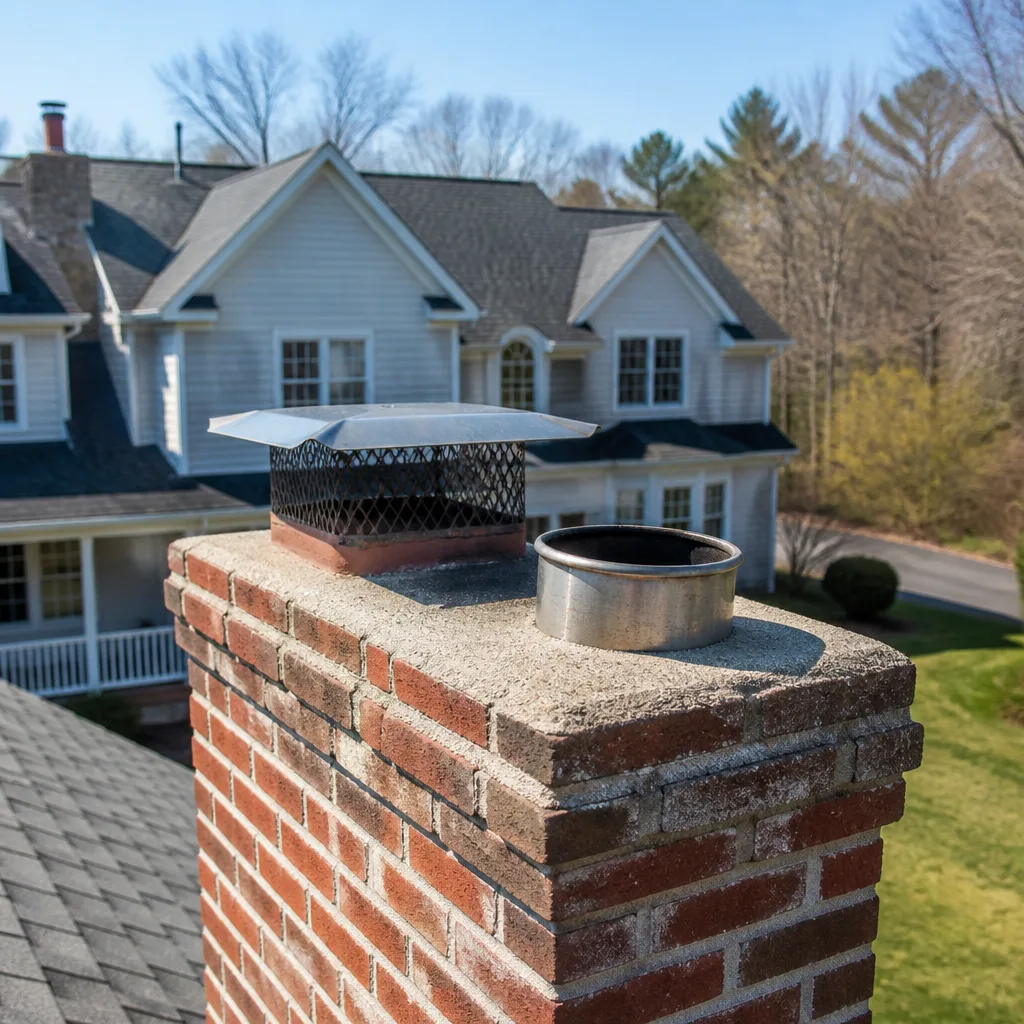
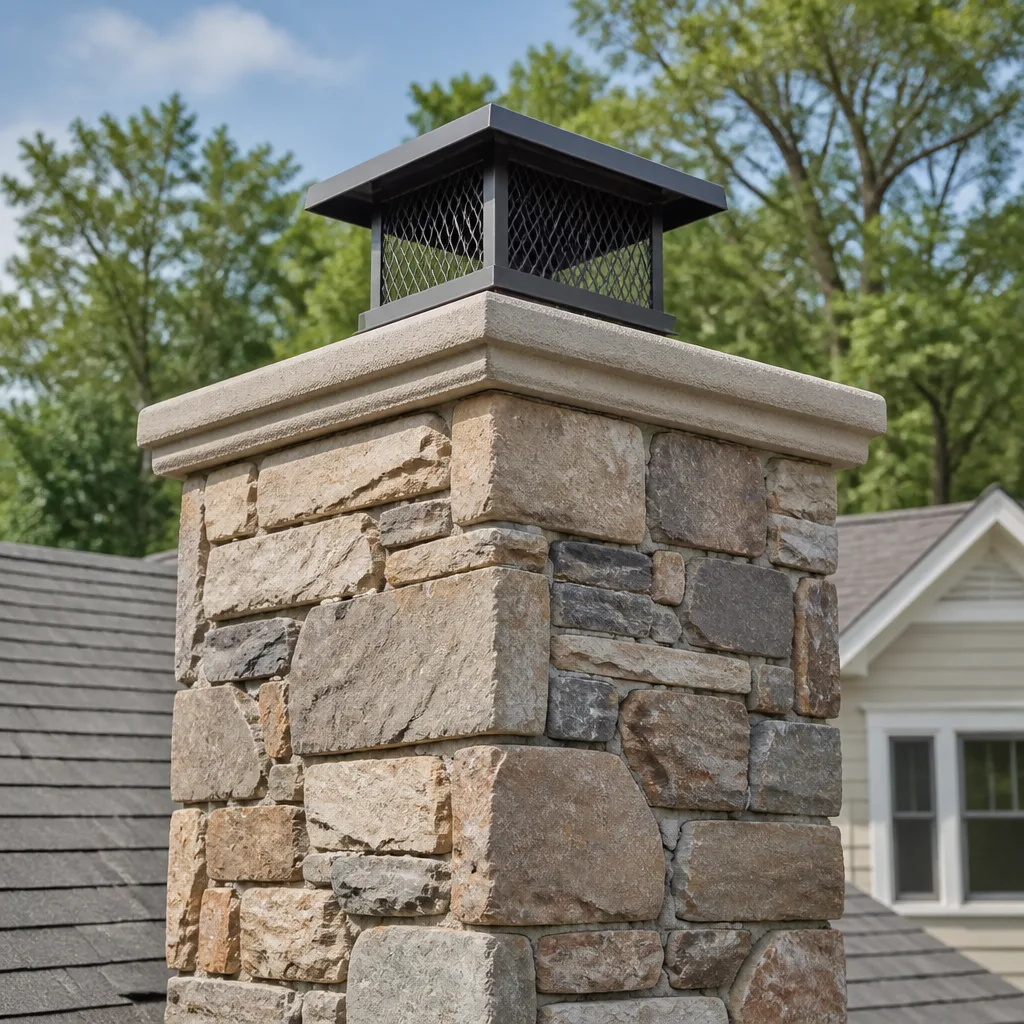
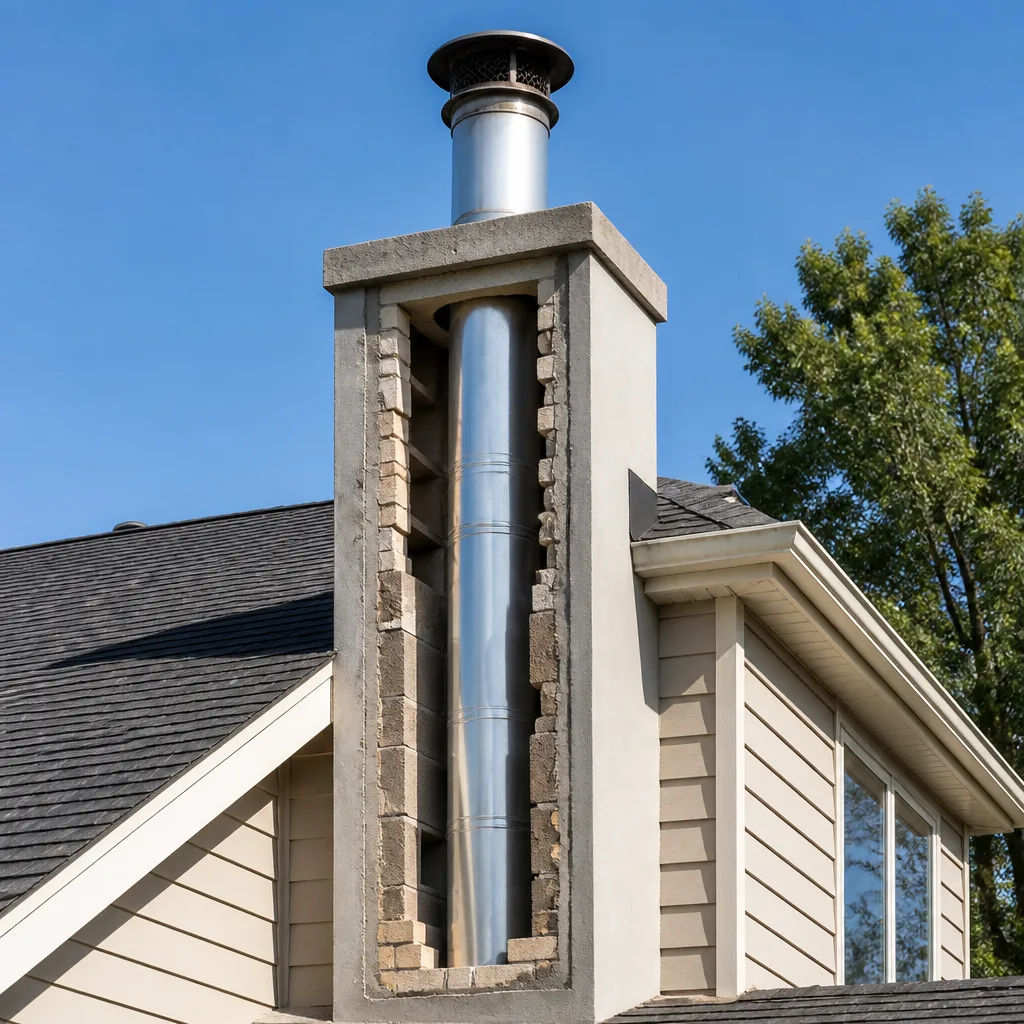
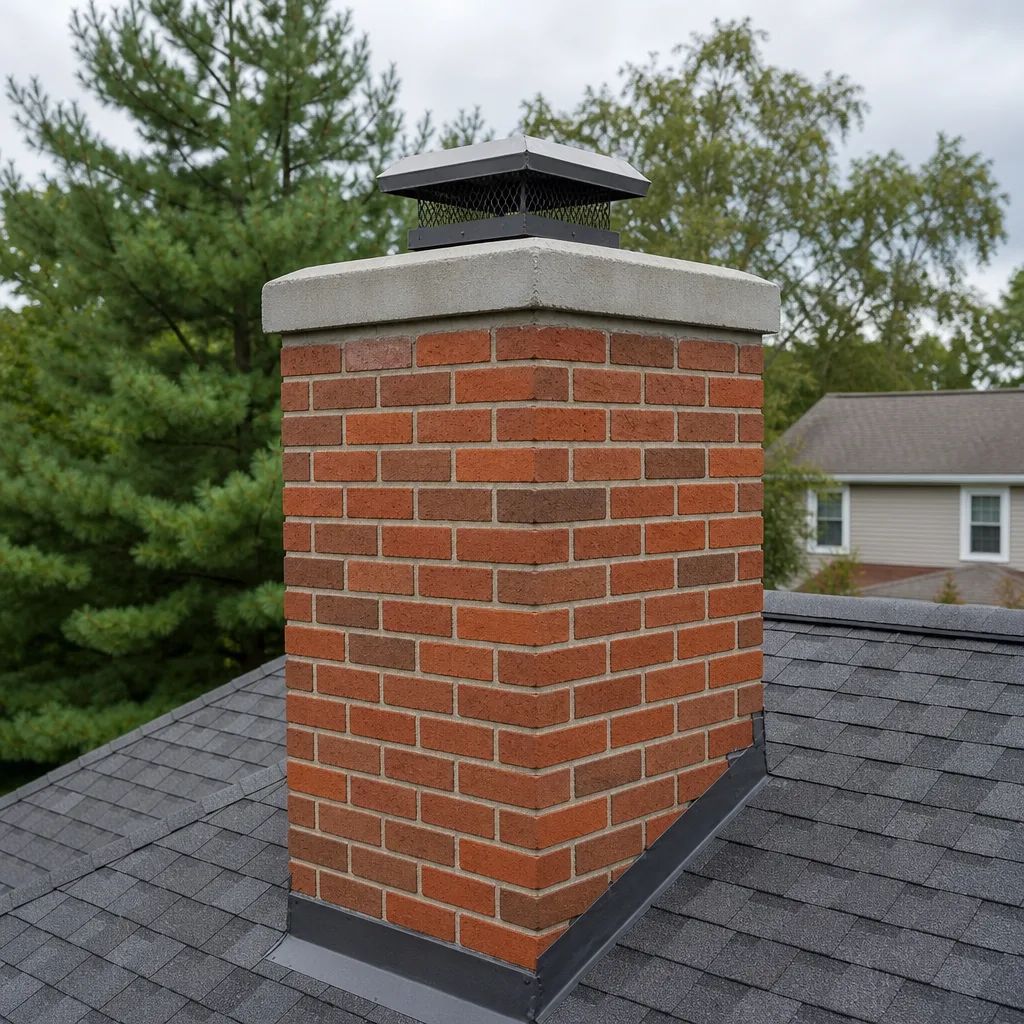
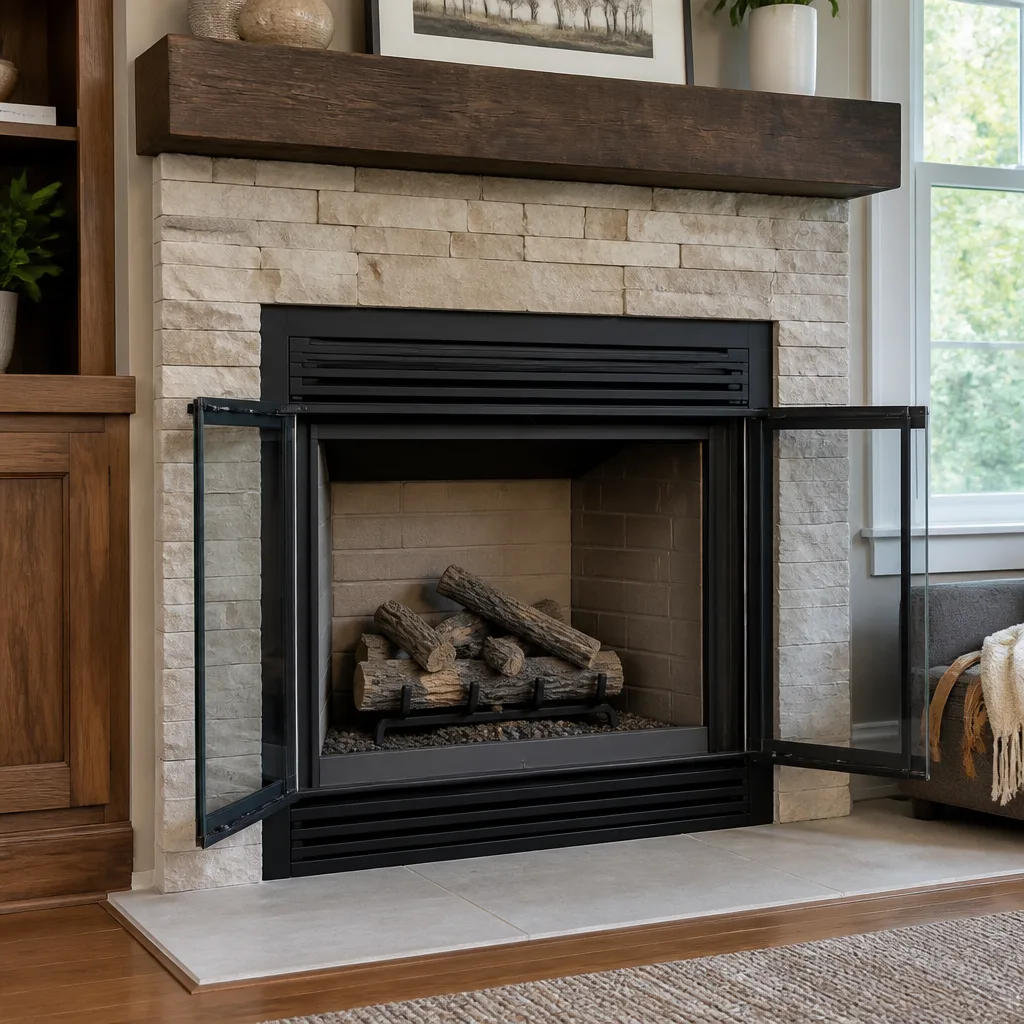
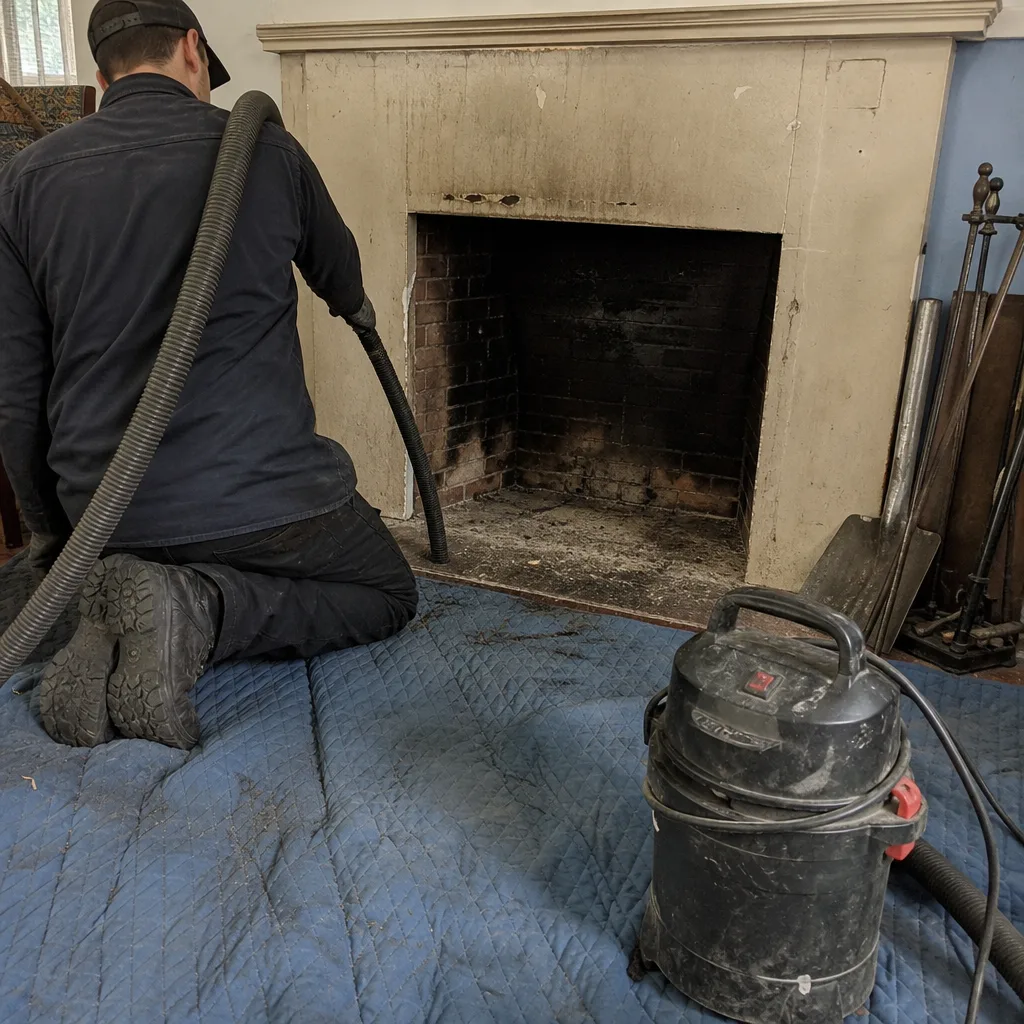 Before
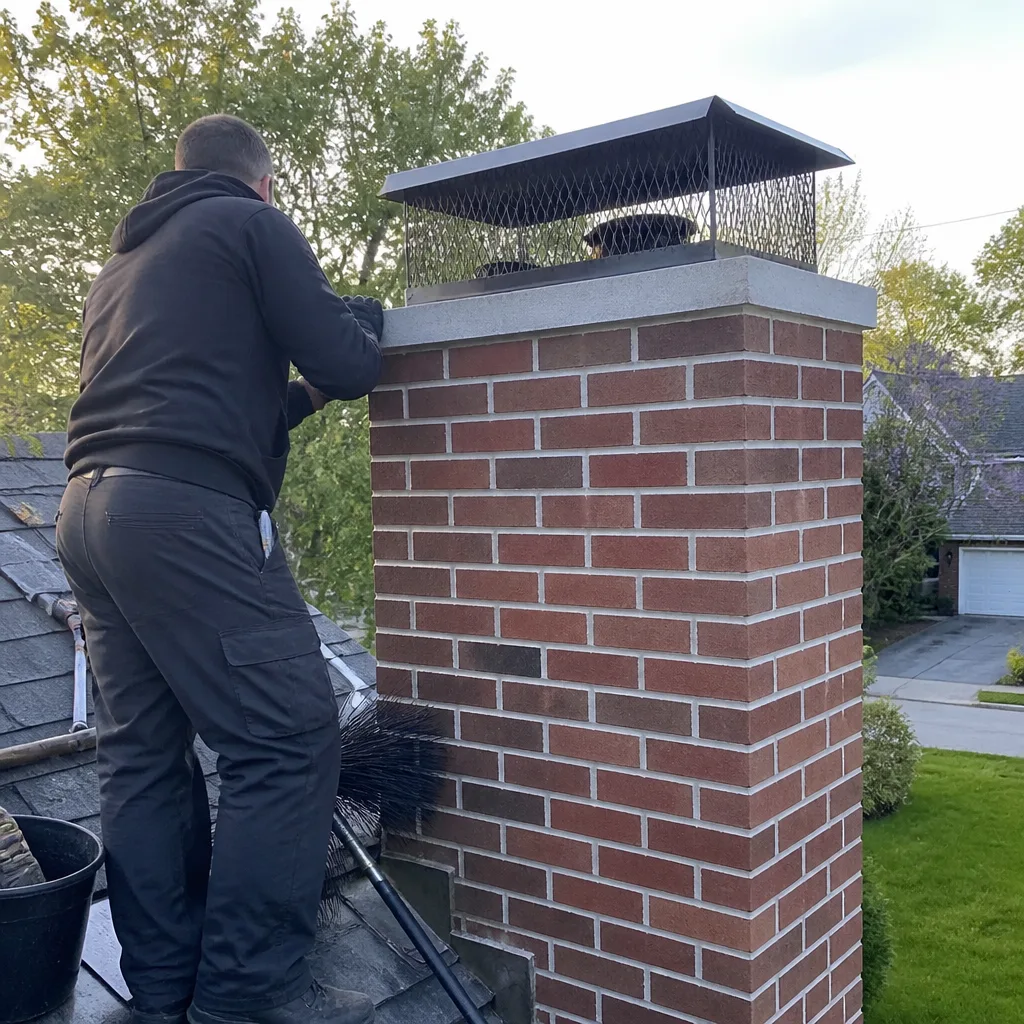 After
After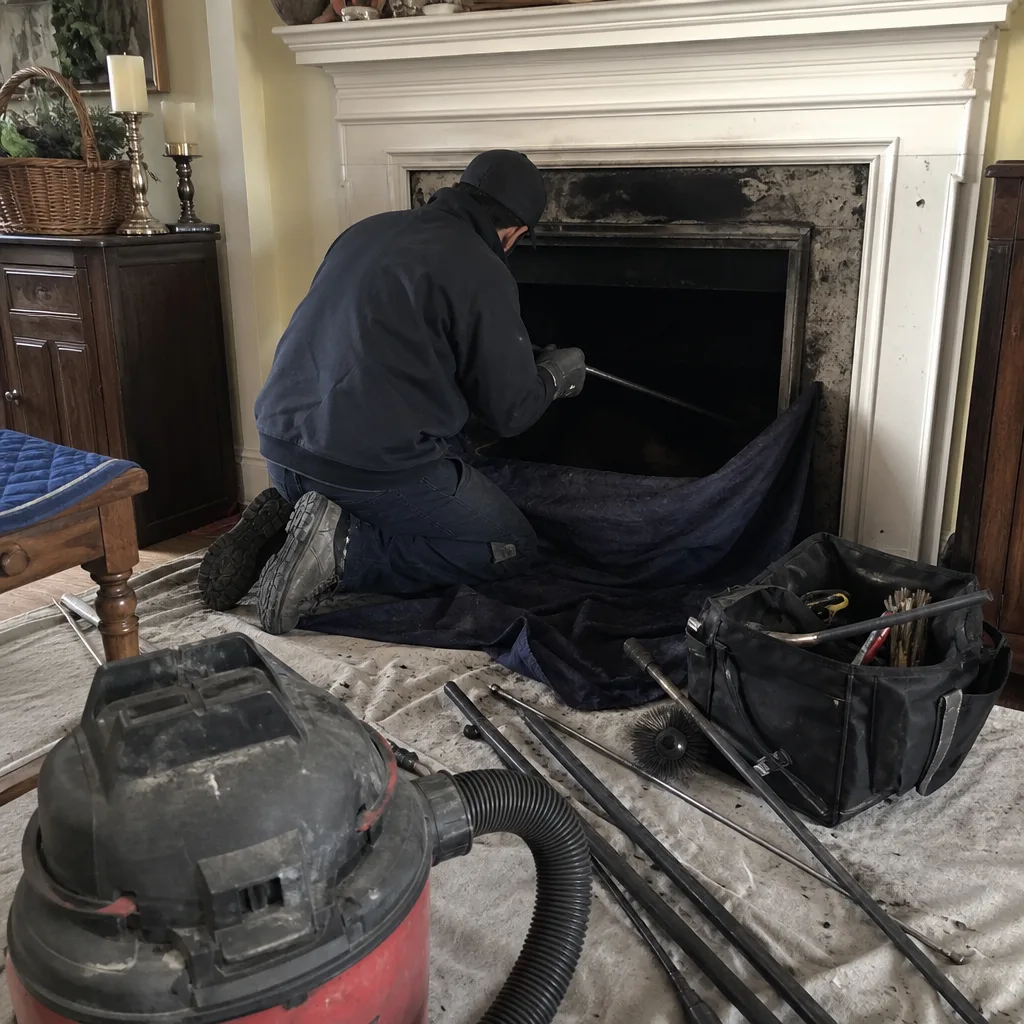 Before
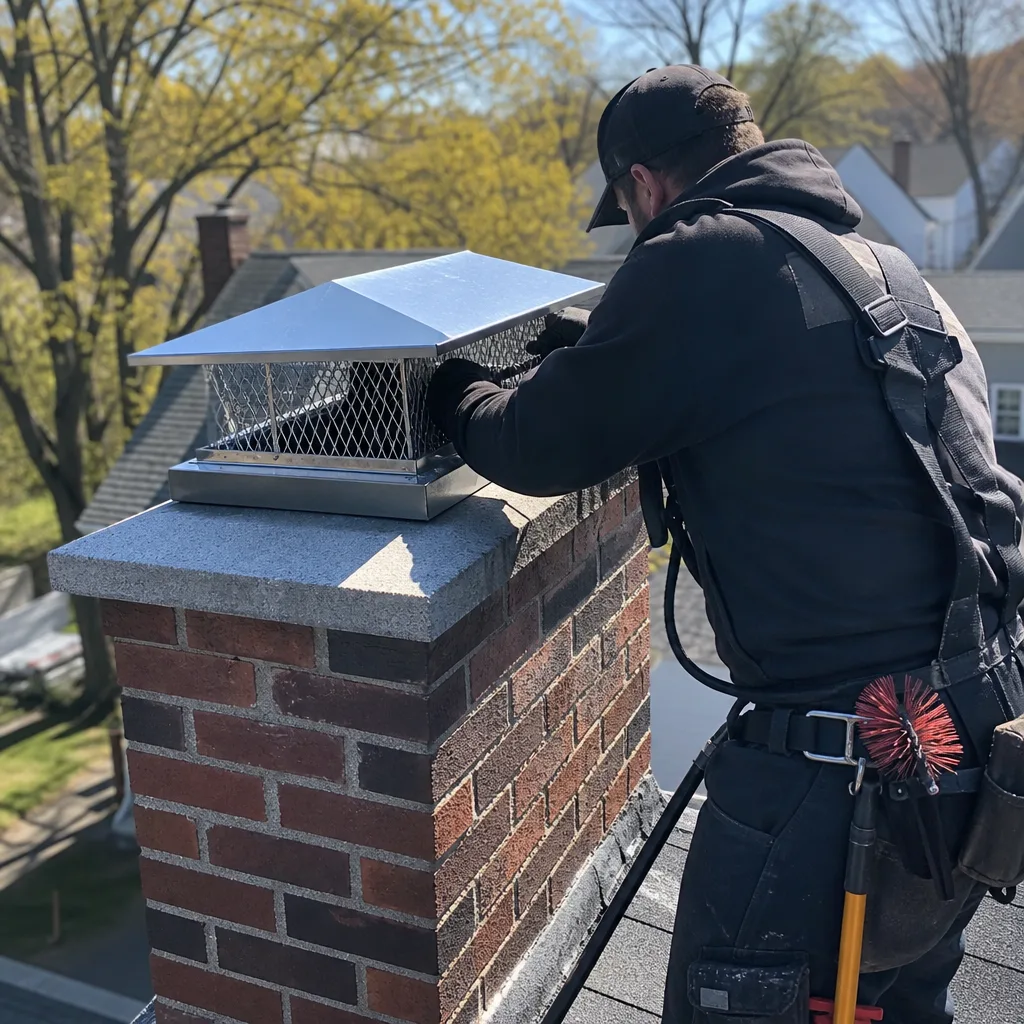 After
After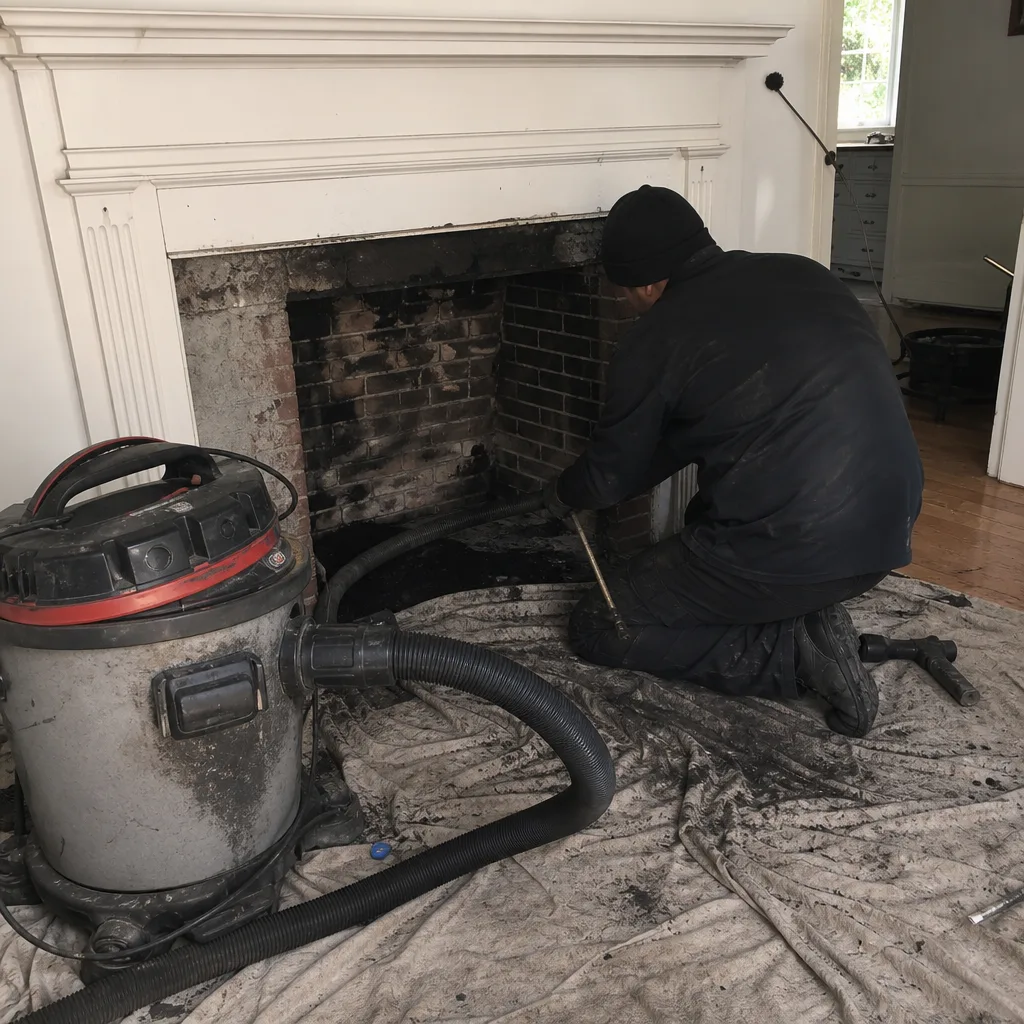 Before
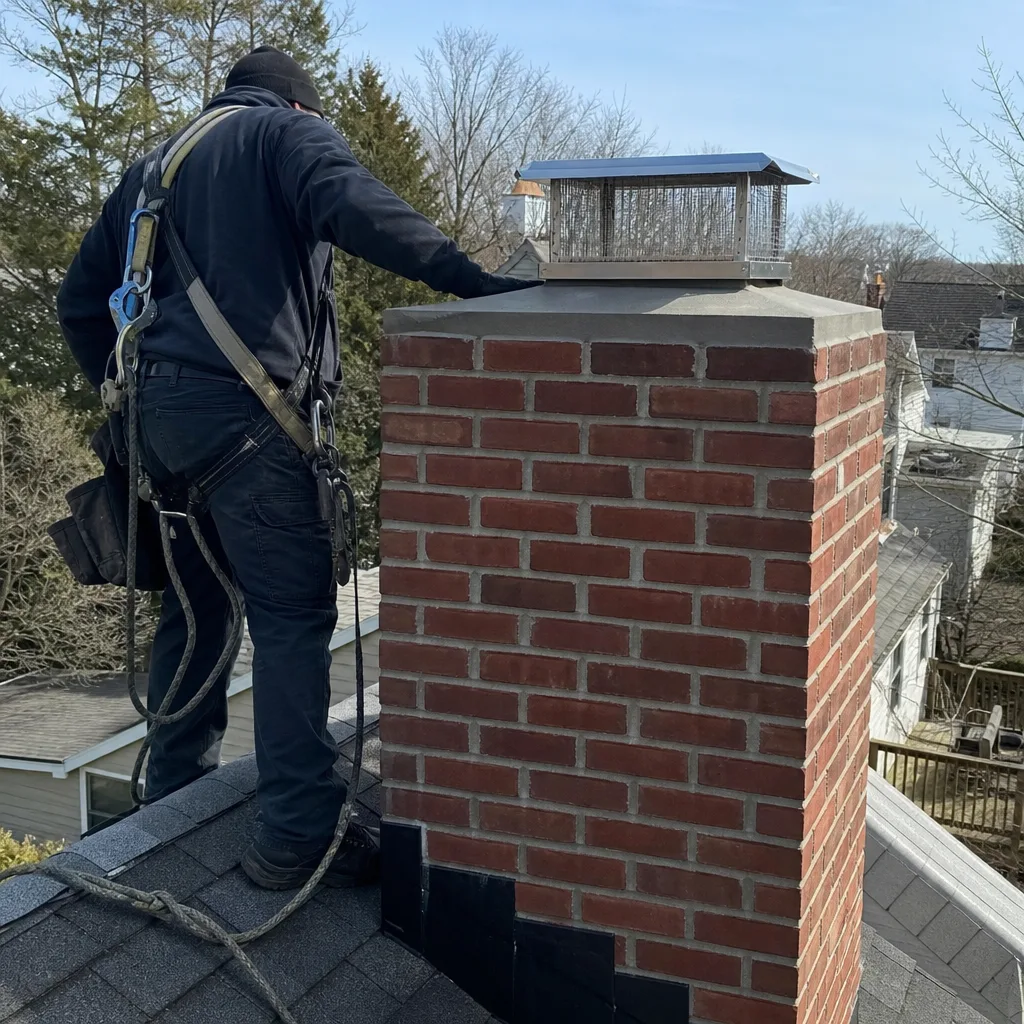 After
AfterDIY vs Professional Chimney Cleaning: The Cambridge Homeowner’s Decision Guide
Most Cambridge homeowners assume the DIY versus professional chimney cleaning question comes down to saving money. It doesn’t. In our 42 years of sweeping chimneys across Cambridge, we’ve learned that the real decision hinges on three factors most YouTube tutorials never mention: what your chimney is actually made of, what has been burning in it, and whether you can prove to an insurance adjuster that it was maintained properly. Cambridge’s housing stock spans from 19th-century triple-deckers in Inman Square to mid-century ranches in North Cambridge to new construction near Kendall Square, and each presents a completely different risk profile for the do-it-yourself approach.
Quick Answer
DIY chimney cleaning is reasonable for Cambridge homeowners with newer factory-built fireplaces, straight flues, and minimal creosote buildup who are comfortable working on a roof and can document their work. For the majority of Cambridge’s older masonry chimneys, especially those serving wood stoves or pre-1950s construction, professional cleaning with a Level-2 camera inspection is the safer choice because consumer tools cannot remove stage-two creosote or detect hidden flue damage that leads to house fires.
Table of Contents
- When DIY Chimney Cleaning Actually Makes Sense in Cambridge
- What a Consumer-Grade Brush Kit Can and Cannot Do
- Cambridge Housing Types and Their Chimney Risk Profiles
- The Insurance Liability Gap: What Happens After a Flue Fire
- DIY Scope Creep: Three Things Homeowners Inspect Wrong
- The True Cost: DIY Inputs vs. Professional Cleaning in Cambridge
- Common Mistakes to Avoid
- When to Call a Professional
- Frequently Asked Questions
- The Bottom Line
When DIY Chimney Cleaning Actually Makes Sense in Cambridge
We’ll start with the scenario where we’re comfortable telling a homeowner to handle their own cleaning. It’s narrower than the internet suggests.
A homeowner in a 2018 condo near Alewife with a factory-built metal fireplace, a straight vertical flue with no offsets, and a gas insert they run twice a month during heating season can reasonably manage their own annual maintenance. The flue is accessible from the firebox without roof work. The gas insert produces minimal creosote. A basic polypropylene brush kit from a hardware store, used carefully, will remove the light soot layer that accumulates. The homeowner should still inspect the exterior cap for bird nests and check that the damper opens fully.
We’ve also seen capable owners of modern wood stoves in newer Cambridge construction handle light cleaning between professional visits. The key variables: the flue is lined with a stainless steel liner (visible from the firebox), the stove is EPA-certified and burns dry hardwood, and the homeowner has a stable ladder, a helper, and no physical limitations.
What disqualifies DIY in our experience? Any of the following:
- The chimney is masonry and unlined, which describes most pre-1970 Cambridge housing stock
- The flue has offsets or bends that require flexible rods and rotary equipment to navigate
- The homeowner has never been on their roof or their roof has a pitch steeper than 6:12
- They burn more than two cords of wood per season, or they burn softwood, painted wood, or construction scraps
- They cannot identify stage-two creosote by sight and texture
Stage-one creosote is flaky and light brown, similar to coffee grounds. It brushes off easily. Stage-two is shiny, black, and hardened like tar. It requires a rotary whip or chains to remove. Stage-three is glazed, dense, and essentially becomes fuel. A homeowner who cannot distinguish these by looking up their flue with a flashlight is flying blind.
The Cambridge climate compounds this. Our freeze-thaw cycles from November through March accelerate masonry deterioration. A flue that looked sound in October can develop spalling brick or a cracked flue liner by February. A brush-only cleaning gives no information about this progressive damage.
What a Consumer-Grade Brush Kit Can and Cannot Do
Let’s be specific about equipment. A typical homeowner kit costs $50 to $90 and includes a polypropylene or wire brush, three to six flexible rods, and sometimes a plastic scoop for ash removal. Professional rotary cleaning systems start around $3,000 for the power unit alone, plus specialized whips, chains, and inspection cameras.
Here’s what each handles:
| Task | Consumer Brush Kit | Professional Rotary System |
|---|---|---|
| Stage-one flaky creosote in straight flue | Effective | Effective, faster |
| Stage-two glazed creosote | Ineffective | Effective with whip/chain attachment |
| Stage-three glazed creosote | Ineffective, may polish it smoother | Requires chemical treatment first |
| Offset or bent flue navigation | Difficult, rods may separate | Designed for this |
| Debris and animal nesting removal | Partial | Complete with high-flow vacuum |
| Flue liner condition assessment | Impossible | Requires separate camera inspection |
| Masonry flue tile crack detection | Impossible | Requires camera and trained interpretation |
The critical gap is diagnostic. A brush moves material downward. It does not reveal what the material concealed. In a 1920s Cambridge triple-decker near Central Square, we once found a three-foot vertical crack in a flue liner that was completely hidden by a thick creosote deposit. The homeowner had brushed annually for six years. The crack was venting combustion gases into the wall cavity. No consumer kit would have exposed this.
Professional-grade materials also matter for repairs when they’re needed. We use HeatShield for flue liner restoration and DuraFlex stainless liners for relining work. These are not available to homeowners at retail. A patched repair with inappropriate materials can create a false sense of security.
Cambridge Housing Types and Their Chimney Risk Profiles
Cambridge’s building eras create distinct chimney risk categories. Understanding where your house falls is essential to the DIY decision.
Pre-1900 Victorian and Queen Anne homes (Harvard Square, Mid-Cambridge, Riverside): These typically have unlined masonry flues built with coal-era dimensions, often too large for modern wood-burning appliances. The mortar is lime-based and deteriorates with acidic flue gases. Multiple wythes of brick mean a cracked flue can vent into wall cavities for years undetected. DIY cleaning is inadvisable without annual professional camera inspection.
1900-1940 triple-deckers and duplexes (Inman Square, Porter Square, East Cambridge): Shared chimney structures are common. One flue may serve a basement furnace, another a second-floor fireplace. These are frequently unlined or have deteriorated terra cotta liners. The party-wall construction means a flue fire affects neighbors. We’ve responded to fires in these buildings where a DIY-cleaned flue in one unit contributed to ignition in an adjacent flue through cracked party walls.
1945-1975 ranches and split-levels (North Cambridge, Cambridge Highlands): Factory-built metal chimneys became common. These are more DIY-friendly if the manufacturer specifications are followed exactly. However, many have been modified with aftermarket inserts or damaged by roofers. The metal chase cover rusts out predictably after 25-30 years. A homeowner can clean the flue but should have the chase and cap inspected professionally every three years.
Post-1975 construction (newer areas near Alewife, Kendall Square infill): Most have lined masonry or factory-built systems with proper clearances. These present the lowest DIY risk if the fireplace is gas and usage is light.
Condo conversions and historic renovations: The most variable category. We’ve found chimneys in converted 1890s mansions where a previous owner installed a high-efficiency gas insert in a flue never designed for it, with no liner and improper venting. The combination looks correct to an untrained eye and is genuinely dangerous.
The Insurance Liability Gap: What Happens After a Flue Fire
This is the point most DIY guides omit entirely.
After a chimney fire, your homeowner’s insurance company will request maintenance records. If the last cleaning was self-performed, the adjuster’s next questions are predictable: What equipment was used? What was the condition of the flue before and after? Was there a documented inspection? Can you prove the fire was not caused by negligence in maintenance?
In our experience serving Cambridge homeowners for over four decades, we’ve seen claims denied or reduced when the policyholder cannot produce professional documentation. This is not universal, but it is common enough to be a material risk. Insurance contracts typically require “reasonable care” in maintenance. A $90 brush kit and a YouTube education may not satisfy that standard in the adjuster’s evaluation.
Professional cleaning from a licensed chimney company creates a paper trail: date of service, condition noted, work performed, technician signature. Our chimney cleaning and sweep service in Cambridge includes a written condition report with every cleaning. If a fire occurs despite proper maintenance, that documentation supports the claim.
The financial exposure is asymmetric. Saving $200 on a cleaning is dwarfed by the potential cost of a denied claim on a $50,000 fire damage loss, or worse, a liability claim if the fire spreads to adjacent properties. In Cambridge’s dense neighborhoods, particularly the multi-family zones near Harvard and MIT, this exposure extends beyond your own walls.
DIY Scope Creep: Three Things Homeowners Inspect Wrong
Cleaning leads naturally to inspection. Homeowners who feel competent with a brush often attempt to assess three critical components themselves. Each is commonly misread.
1. Flue liner condition
A flashlight pointed up a flue reveals only the surface directly in line of sight. Cracks in flue tiles frequently occur on the back side, between tiles, or at offsets where the flue changes direction. A cracked liner can appear intact from below while venting combustion gases into the chimney structure. Proper assessment requires a camera that can pan and zoom, operated by someone who has seen hundreds of flues and knows what normal deterioration versus critical failure looks like. Our Level-2 inspections use camera equipment that produces photos the homeowner can see, with a plain-English verdict on what requires action now versus what can be monitored.
2. Chimney crown and cap integrity
Hairline cracks in a concrete crown are normal aging. Spalling with exposed aggregate requires repair. The difference is not obvious from the ground. A homeowner who seals a badly deteriorated crown with caulk has made the problem invisible while accelerating underlying decay. Similarly, a cap that appears secure may have corroded mounting brackets that detach in the first winter storm. We’ve replaced caps in Cambridge that fell into yards on Mass Ave after homeowners pronounced them “fine.”
3. Creosote stage and thickness
Homeowners consistently underestimate creosote accumulation. They see a relatively clean firebox and assume the flue matches. Or they see black staining and assume it’s all equally dangerous. In fact, a thin layer of stage-three glazed creosote is more hazardous than a thicker layer of stage-one. Location matters too: creosote concentrates at flue restrictions, at the smoke shelf, and above the damper, none of which are visible without specific inspection techniques. We’ve removed 40-pound deposits from flues that the homeowner described as “not too bad.”
The True Cost: DIY Inputs vs. Professional Cleaning in Cambridge
The simple comparison, “$80 kit versus $250 professional cleaning,” misses most of the actual inputs. For a detailed Chimney Cleaning Cost Breakdown: The Cambridge Homeowner’s Reference for 2026, here’s the full accounting for a typical Cambridge wood-burning fireplace.
DIY Actual Costs:
| Item | Cost |
|---|---|
| Brush and rod kit (mid-grade) | $75 |
| Drop cloths, tarps, protective gear | $40 |
| HEPA vacuum rental or purchase for soot | $50 (rental) / $200 (purchase) |
| Roof ladder or stabilizer (if needed) | $80 |
| Disposal bags and fees (Cambridge requires proper ash disposal) | $25 |
| Time: 3-5 hours including setup, cleaning, cleanup, disposal | Your time |
| Risk premium: potential damage, incomplete cleaning, injury | Unpriced |
| First-year total | $270-$470 |
| Subsequent years (amortized equipment) | $100-$150 |
Professional Cleaning in Cambridge:
| Item | Cost |
|---|---|
| Standard sweep and inspection | $220-$320 |
| Level-2 camera inspection (recommended every 2-3 years) | $150-$250 additional |
| Time required from homeowner | 30-60 minutes |
| Documentation for insurance | Included |
| Debris disposal | Included |
| Condition report with photos | Included |
The professional cost includes diagnostic capability the DIY approach cannot replicate. For Cambridge’s older housing stock, we recommend budgeting for a Level-2 inspection every second or third year. This typically adds $150-$250 but identifies problems that, left undetected, become $2,000-$8,000 repairs. See our Seasonal Chimney Cleaning Care for Cambridge: Year-Round Homeowner’s Guide for when to schedule these inspections.
Our Hearthstone Chimney Co. home page lists current seasonal offerings, including our $89 Seasonal Tune-Up for qualifying systems. The $50 Off Any Repair Over $250 and permanent 5% Senior and Veteran discount also apply for eligible Cambridge homeowners.
Common Mistakes to Avoid
- Using a brush that’s the wrong diameter for the flue. An undersized brush leaves creosote on the flue walls. An oversized brush can lodge in the flue, requiring a professional extraction call that costs more than the original cleaning would have.
- Cleaning from the bottom only. Soot and debris fall onto the smoke shelf, where they obstruct airflow and become a new fire hazard. Professional cleaning includes smoke shelf access and vacuuming.
- Burning creosote logs as a substitute for mechanical cleaning. These products loosen deposits but do not remove them. The loosened material must still be brushed out. We’ve found chimneys in Cambridge where years of creosote log use created a thick, flaky layer that partially obstructed the flue.
- Ignoring the exterior. A clean flue with a missing cap or deteriorated crown will re-contaminate within weeks. Cambridge’s tree canopy and squirrel population make cap integrity particularly important.
- Attempting to clean a gas flue with the same methods as wood. Gas flues develop different deposits, including sulfur compounds that corrode masonry. The wrong brush material can damage a metal gas flue liner.
- Working alone on a roof. This is genuinely dangerous. Cambridge’s older homes often have irregular rooflines, slate or tile surfaces that are slippery when damp, and limited anchoring points. Falls from second-story roofs cause serious injury.
- Assuming no visible problem means no hidden problem. The most expensive chimney repairs we perform in Cambridge are for flues that were “cleaned regularly” by homeowners who never had a camera inspection. By the time symptoms appear, damage is extensive.
When to Call a Professional
Call a professional sweep when your chimney serves a wood-burning appliance in a pre-1970 Cambridge home, when you’ve never had a camera inspection, when you smell smoke in rooms adjacent to the chimney, when you see exterior staining or deterioration, or when your insurance company requires documented maintenance. Also call when you’ve attempted DIY cleaning and are unsure whether the job was complete. Our How to Hire a Chimney Cleaning Contractor in Cambridge: A Step-by-Step Guide explains what to look for.
We’re not interested in talking capable homeowners out of work they can safely handle. We are interested in preventing the calls we receive every October from Cambridge residents who discovered, too late, that their summer brush-out missed the crack, the obstruction, or the glazed creosote that mattered.
Hearthstone Chimney Co. offers free estimates in Cambridge. Our technicians are background-checked and uniformed, most jobs are completed in a single visit, and pricing is agreed upfront with no surprises on the bill. Call (857) 392-4709 to schedule. A live person answers, 24 hours a day, 7 days a week.
Frequently Asked Questions
A standard chimney sweep and basic inspection in Cambridge typically runs $220 to $320, with Level-2 camera inspections adding $150 to $250. Prices vary by chimney height, accessibility, and the amount of creosote accumulation. Call (857) 392-4709 for an exact quote - estimates are free.
The National Fire Protection Association recommends annual inspection for all chimneys, with cleaning frequency determined by use and fuel type. In Cambridge, wood-burning fireplaces and stoves used as primary heat sources typically need annual sweeping. Gas fireplaces need less frequent mechanical cleaning but still require annual inspection of the venting system. The freeze-thaw climate here accelerates masonry deterioration, so we recommend annual professional inspection even for lightly used systems in older homes.
You need a new liner when the existing one is cracked, deteriorated, improperly sized for your appliance, or absent entirely. We never recommend liner replacement without camera documentation you can see yourself. Some cracks can be repaired with HeatShield rather than full replacement. In Cambridge’s unlined masonry chimneys, a stainless steel liner from DuraFlex is often the correct solution, but the decision should be based on documented condition, not a sales pitch. Our Free Second Opinion on any written estimate ensures you have that documentation.
Skipped maintenance leads to creosote accumulation, which restricts airflow and becomes fuel for chimney fires. It also prevents detection of progressive damage: cracked flue liners, deteriorated mortar, and water intrusion that destroys chimney structure from the inside. In Cambridge, we’ve seen neglected chimneys that required $6,000 to $15,000 in rebuild costs, versus $250 annual maintenance that would have prevented it. The risk is not theoretical - chimney fires occur in Cambridge every heating season.
Standard shop vacuums lack the HEPA filtration needed for fine soot and can redistribute respirable particles throughout your home. Chimney soot contains combustion byproducts including creosote fragments that are respiratory irritants. Professional sweeps use industrial vacuums with proper filtration and containment. If you do DIY cleaning, at minimum use a vacuum rated for fine particulate and wear an N95 respirator.
Professional sweeping should not be messy. We use drop cloths, containment systems, and high-flow vacuums with HEPA filtration to protect your home. DIY cleaning is as messy as your preparation allows. The critical error is underestimating how far fine soot travels - it penetrates closed doors and settles on surfaces throughout the floor. Plan for extensive protection or expect significant cleanup.
The Bottom Line
The DIY versus professional chimney cleaning decision in Cambridge is not primarily about money. It’s about matching your actual chimney type, your physical capability, and your risk tolerance to the right maintenance approach. For newer, simpler systems with light use, DIY is a reasonable option if you’re thorough and honest about your limitations. For Cambridge’s predominant older masonry housing stock, professional cleaning with periodic camera inspection is the safer investment. The cost difference is modest. The diagnostic gap is substantial. And the documentation matters the moment something goes wrong. Explore our more guides & resources for additional homeowner advice.
Done right - and we stand behind it. That’s the standard we’ve kept for over 42 years.
Written by Russell Haines, Owner at Hearthstone Chimney Co., serving Cambridge since 2014.